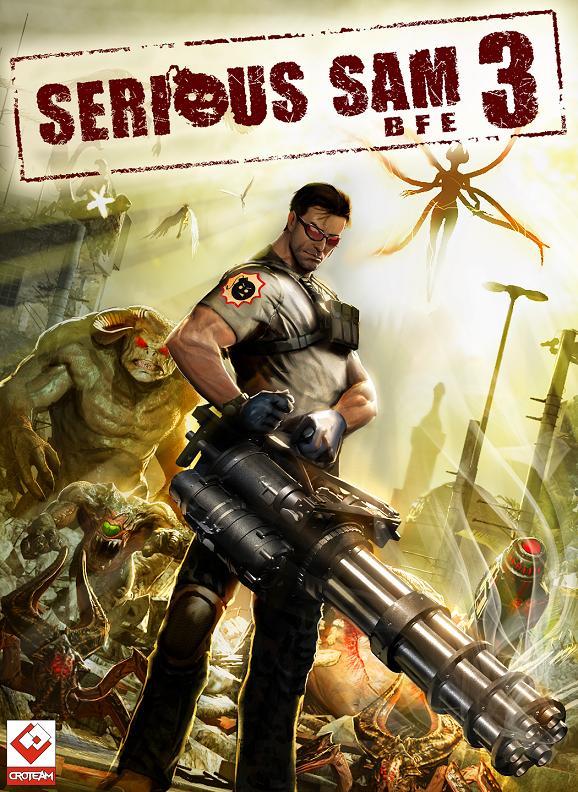
Serious Sam 3: BFE

  • Original Release Date: 22 November 2011
  • Developer: Croteam
  • Publisher: Devolve Digital

Summary

            In some franchises, the second title is often seen as a highwater mark.  My mind immediately goes to Dead Space 2 or FEAR 2—franchises who (I personally believe) peaked in many ways with their sequels.  Both of those franchises experienced dips with their threequels, although the former at least crafted an enjoyable, albeit slightly unfaithful, experience.

            With Serious Sam, you had a ‘sequel’ that looked to be an effort to cash in on a wave that had added more layers of humor to the title character through versions of the original encounters being ported to Gamecube and Xbox.  Those versions included comedic cutscenes rife with wacky humor, fourth wall moments, and slapstick, which would be amplified in Serious Sam 2.  The end result was an okay game bogged down by the aforementioned terrible qualities.

            Serious Sam 3 seems to ignore everything in this franchise that existed after The Second Encounter.  This threequel builds off the formula from the first two encounters—taking what worked and offering the addition of better visuals, sounds, and storytelling.  While the story here is a prequel (and feels a bit shorter than the other mainline titles), it nevertheless stands out as providing a pivotal chapter for fans of this series.

            A prequel, Serious Sam 3 takes nice steps to create this distinction by relying upon even more ‘grounded realism’ than the first two encounters.  Weapons all feel human, even if they still pack that same, satisfying punch that they did in the earliest titles.  The visuals aren’t as colorful, but it is still the franchise’s standard of providing you with vast, mostly outdoor areas with which to combat hordes of alien monsters.  Serious Sam 3 feels a little cramped in spots and even includes dedicated underground temple stages, but much like the vehicle sequences in the second title, those feel like welcome breaks from the occasionally ad nauseum pattern of clearing one large area and repeating the process in another.

            Serious Sam 3 should entertain fans of the franchise, whether they preferred the first two games or the sequel.  Even though the slapstick has been replaced with a more serious veneer of grit and grayed-out colors, this is still a Serious Sam experience worth slaughtering your way through.

Technical/Presentation (8/10)

Gameplay

            Serious Sam 3 ditches the majority of what was added into the second game and opts to focus on what worked the best in the originals, with one notable exception.  You’ll spent most of the game murdering everything in your path with weapons, and you’ll have a horde of health, armor, and ammo to collect along the way.  The boosters are removed, which I take to be a way for the game to be more rooted in realism, as the score feature is still maintained (I still don’t understand the point of score keeping in this game series).  The game does the benefit of outlining pickups with different colors to help see it (since the game has a lot more visual clutter, given it’s a more modern title).  There are occasionally puzzles and ‘key items’ you’ll have to collect in order to progress a stage.  Sam maintains his AI, but it feels almost prototype-like in this title—only providing visuals and some blurbs of information.

            The most distinct addition from the two original titles is the option to melee.  The melee option only works on enemies that are roughly the same size as Sam (so you can’t melee a biomech to death, but you could try with the sledgehammer, I suppose).  The melee option is fun, and it can have uses in combat—I frequently used it when I was running and had to quickly dispatch someone who was in my path and didn’t want to waste bullets or risk getting hit by my own rocket launcher.  Like Serious Sam 2, there are many boss fights in this title, and I liked that many of the earlier ‘bosses’ become stable monsters later on. 

            Unlike previous Sam games, Serious Sam 3 is centered wholly in Egypt.  This game is a prequel, so it takes place before Sam left to the past, so you see a world collapsing under invasion.  Much of the set pieces are crumbled cities and the various ruins that Sam visits along the way.  There are a handful of underground segments which are illuminated by flashlight and had me thinking of other FPS titles.

            If there is one thing I can critique here (and this may apply to the series in general), the game is paced bizarrely.  Serious Sam 3, on paper, is the shortest of the franchise, with about a dozen or so stages.  Yet, some of those earlier stages are maybe under 15 minutes on Normal difficulty.  On the other hand, the last three or four stages are all nearly triple that (and likely ‘then some’, since the difficulty ramps up).  The second game had this as well—there were three 5-minute missions and then an hour-long final mission.  It was weird, and I’m sure I’m a fan of that.

Visuals

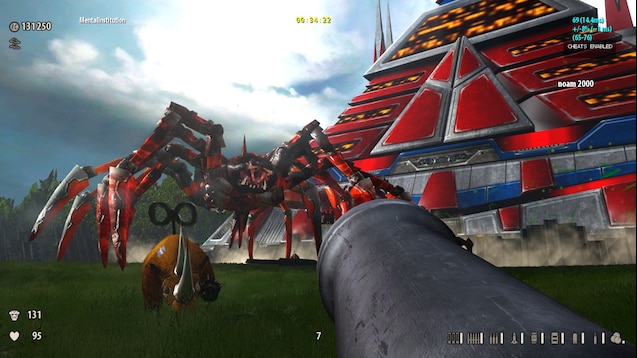
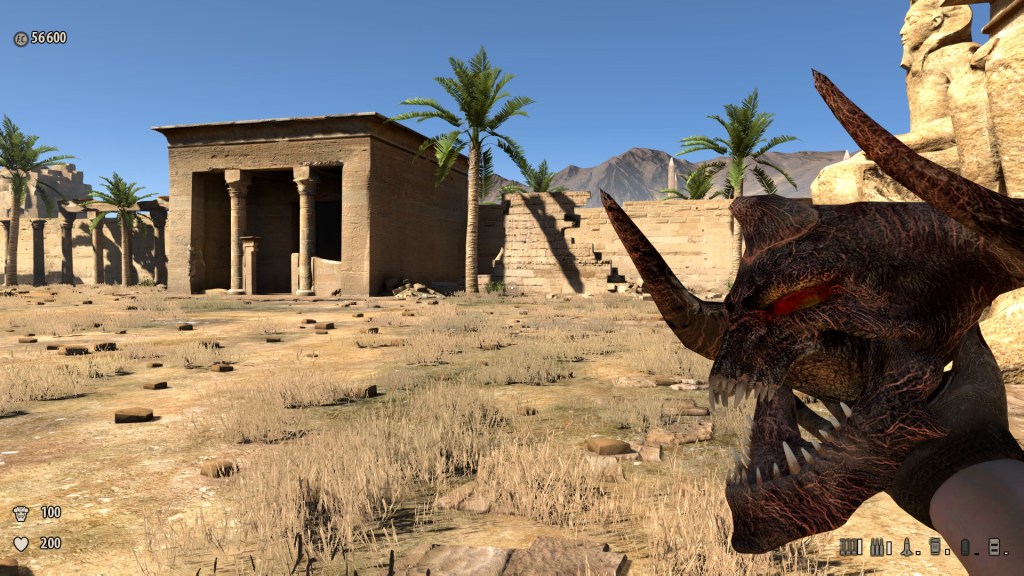
            As mentioned in the last paragraph above, the game is centered in a near future version of Egypt that has been almost entirely destroyed by Mental’s forces.  The newest game is this series that I have played, the game looks very pleasant and even shows a marked improvement over the HD remakes of the original two titles.  The cartoon nature of Serious Sam 2 is removed entirely, although at times the game almost feels too ‘grayscale’.  The original encounters had vibrant visuals in various historical settings, but the setting here feels almost like a Call of Duty game with monsters.  I do appreciate that it retains the second game’s trait of having much of the environment be destroyable, as that does help the amplify the carnage.

            Unlike other Sam titles, the gun selection here is toned down slightly.  Aside from the rocket launcher and the plasma gun (which you never encounter in the game outside of it being hidden in secret areas along with the sniper rifle), the weapons all feel like they could be taken from someone’s home or a military armory.  There is no whirling saw blade, laser pistol, or automatically reloading double shotgun.  An armband Sam acquires from Sirian ruins can be used to fight, but it’s a glorified melee weapon.  Since this is a prequel set firmly on a post-apocalyptic Earth, I like this touch a lot.  I also enjoy Sam’s appearance, aside from the fact that this game hasn’t quite mastered authentic-looking lips—Sam’s face looks a bit too plastic when he speaks.

            Speaking of speaking—the game includes a variety of cut scenes, but unlike the second title, these progress the story and provide far less cringe-y examples of the down-to-earth humor of this franchise.  Sam is at his best when he’s insulting aliens, swearing, or making bad puns.
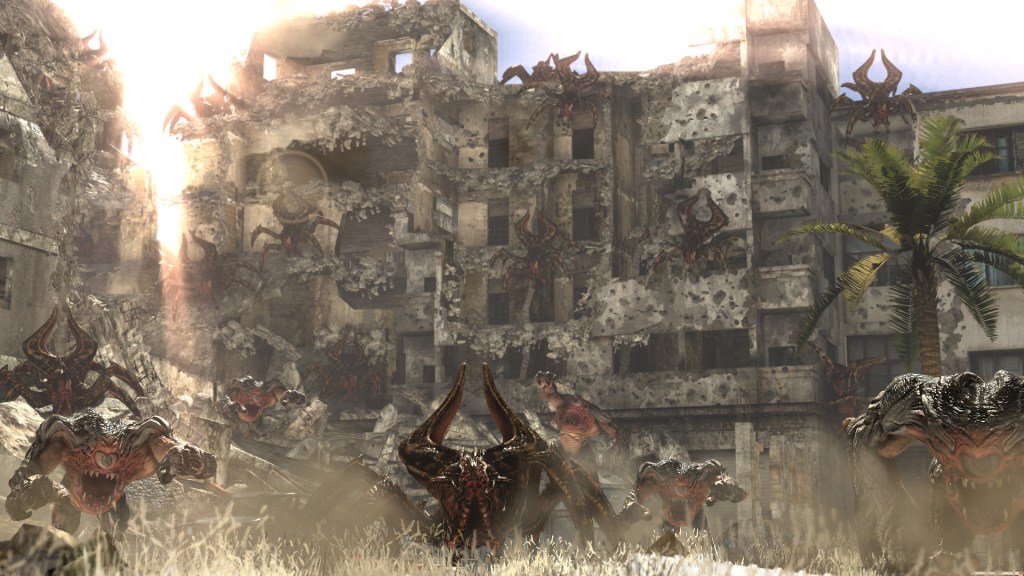
Portions of this game take place in these urban environments, and I’ll admit that I got a big kick out of them.

Sound

            The sounds in this game are the best in the franchise, with the guns all looking and sounding extremely authentic.  Everything feels smoothed and polished relative to previous entries, although many of the sound effects seem to be reused from the original games (the werebull noises, for instance).

            The score in this game is fantastic.  It incorporates that thundering, heavy metal score of previous titles but cranked up to even better levels.  At many points where the music was at its most ‘extreme’, I felt like I was playing part in an Iron Maiden song or something—all thundering music and monsters.  When you couple this score with the game’s ability to emulate lighting effects and thunderstorms, it makes for an amazing field of combat.  While the improved (to PS3-gen standards at least) graphics were expected, the stellar sound and score was a nice bonus.

Story (6/10)

            Serious Sam’s first two encounters had a loose narrative guided by NETRISCA’s directions, but for the most part, Sam was by himself—one man again a horde of evil on a mission to save the future.  The second title added cutscenes, NPCs, mountains of dialogue, and slapstick, but it accomplished very little in the form of coherent storytelling given its penchant for nonsense (honestly it was like Looney Toons but with bloodshed).

            Serious Sam 3 opens with a beginning scene that is very similar to the one at the beginning of the First Encounter.  Coupled with the first stage’s Egyptian setting, I immediately wondered if the threequel was actually a remake/reimaging before realizing that this was ‘the past.’  The Time Lock hadn’t been activated yet, which meant this was a prequel that would showcase the events that led up to the start of the First Encounter.

            Serious Sam 3 succeeds with storytelling mainly because it stays… serious.  Netty is a computer AI, so the guidance is provided by a woman named Quinn at the Earth Defense Force HQ.  She guides Sam to find a professor who may have figured out how to work the Time Lock, and she later helps him navigate Luxor and Karnak to activate the technology that lay hidden beneath the sites.

            Along the way, Sam is assisted by a few helicopter pilots, and one of them, a woman named Hellfire, hints at prior past between them.  Unlike the other soldiers, Hellfire has orange shades and a more unique outfit (compared to other soldiers) like Sam.  Hellfire drops off Sam at his next location, and after a journey to the Great Pyramid, Sam heads back to HQ only to realize that the Earth is truly in the endgame of its war against Mental.

Spoiler Zone
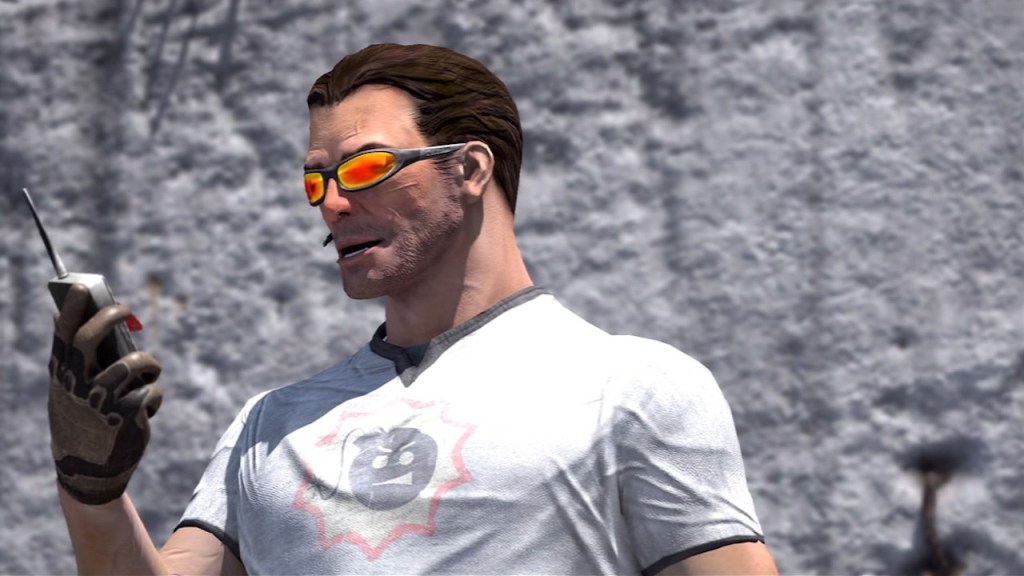
There’s just something with this dude’s design that just makes me uncomfortable, but I’ll always enjoy my favorite not-Duke Nukem

            Anyone who has played the first two encounters knows how this story will end the moment they settle into that first level.  After activating the Time Lock, Sam is shot down from yet another helicopter.  When he manages to reestablish contact with the EDP, he learns from Hellfire that Quinn and the majority of the people at HQ were killed in a surprise attack by Mental’s forces.  She advises Sam to stock up and lay low moments before she dies off screen to a Gnaar attack.

            Realizing that he’s ‘The Last Man on Earth’ (the title of the penultimate stage), Sam sets his sights on the Time Lock.  He murders his way across a valley and through some mountains to arrive at the location of the device.  After a battle with Ugh-Zan IV (the cybernetic daddy of the First Encounter’s final boss), Sam places a call to Mental, a la both the first two encounter endings.  He gets his daughter, Judy, and Sam informs her that he’ll be coming to kill her dad.  She tells him to hurry up, as her dad is about to ‘moon’ the Earth (a throwback to something Mental told Sam at the start of the stage).

            Sam looks up and sees that the actual Moon is being driven into the Earth, so he jumps through the Time Lock, arriving at the starting location of the First Encounter.  The end credits roll over the remains of a now destroyed planet Earth.

Reflection

            Serious Sam 3 is this franchise’s first attempt (as far as I can tell, in the mainstream titles) to craft an actual narrative.  I refuse to consider anything in the second game to be coherent storytelling, so by comparison, what you have here is very good.  Sam is back to a roll where he predominately throws out insults and one-liners, and much like the original encounters, there is more good than cringe with his dialogue.  The addition of cut scenes allows for the introduction of additional characters, even if many of them aren’t destined to reach the final screen.

            The concept of making this game a prequel to the first two encounters, rather than a sequel to Serious Sam 2 seems to reinforce the notion that the developers at Croteam would rather ignore Serious Sam 2 for the time-being.  That said, the story here is a nice companion piece for the overall lore.  The fact that the Earth has already lost provides for a nice backdrop to all the murder, evoking my memories of XCOM.  Even so, the game does little to provide any real character development, and that’s including Sam.  There’s still so much of his own backstory that hasn’t actual played out in any of the mainline games, and the main villain has yet to have much development (or even a face).  That Mental is faceless for two decades will only pay off if it winds up being a worthwhile reveal.

            The fact that the fourth game is apparently going to be a prequel to this title makes sense, because it means that the developers can flesh out some of the characters introduced here (like Hellfire), while being able to showcase the actual invasion of the planet from start to (nearly) finish.

Bias/Nostalgia Tint – “Zero decapitated Kleer skulls out of five”

No previous exposure to this title; have had it in my Steam library since the earliest days of my Humble Bundle account (my second bundle purchase!)

Overall: B-

Playtime

  • 6 hours (5/4-5/5/2020)

Achievements

  • Unlocked 16 achievements on one playthrough
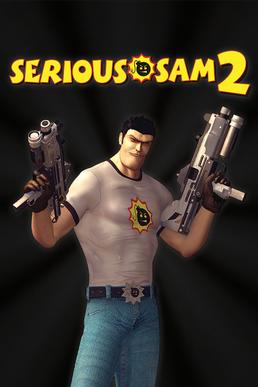
Serious Sam 2

  • Original Release Date: October 11th, 2005
  • Developer: Croteam
  • Publisher: 2K Games

Summary

At some point after the release of Serious Sam: The Second Encounter, the people at Croteam apparently got experimental with how they wanted to approach the series.  Either that, or you can ‘blame’ the precense of new publish 2K Games for pushing the developers to make the game a little more cartoony and a little less serious (pun intended).  This makes some sense, when you see that the original two games have been remade ‘twice’ (an HD remake and then a VR version) and the second game isn’t even included in ‘Serious Sam Fusion’.  In my mind, it’s probably a little bit of both, since Croteam did create the spinoffs that predated Serious Sam 2.

            That aside, Serious Sam 2 is a bizarre game that I can’t say I totally enjoyed.  Is it a bad shooter?  No, of course not.  If you came to this game wanting to blast apart hordes of monsters with big guns, you came to the right place.  If you were expecting a great sequel to the first two games, you did not, because Serious Sam 2 jettisons a lot of the ‘serious’ aspects of those games (monster and environmental design) and turns it into cartoon parody, with nonsensical monsters and levels that are ridiculous and often living parodies (like an entire fairytale kingdom land ruled by Elvis). 

            While Sam in the first two games spouted one liners from time to time, and his AI often had snarky text quips, this game turns Sam into something ripped straight out of a British cartoon from the 1960s.  At first, I was mildly entertained by this, but it wears on you after many hours of various, one punchline cutscenes and ham-fisted pop culture references.  I remember thinking to myself, about 8 hours into the game, that ‘I am shocked there hasn’t been some Benny Hill gag.’  Without providing any spoilers, something close enough to said gag took place in the end credits.

            In terms of gameplay, the game sees almost all the standards of the first two titles kept, and it adds vehicles, grenades, and the random ability to pick up and throw certain objects (useless in combat but used for finding secrets).  In the end, I can see that there is some value in this game, if you can get past the needless slapstick and cartoon goofiness.  It makes sense to me that this game has seen zero sequels (Croteam’s titles since then have been spinoffs and prequels, apparently).

Technical/Presentation (6/10)

Gameplay

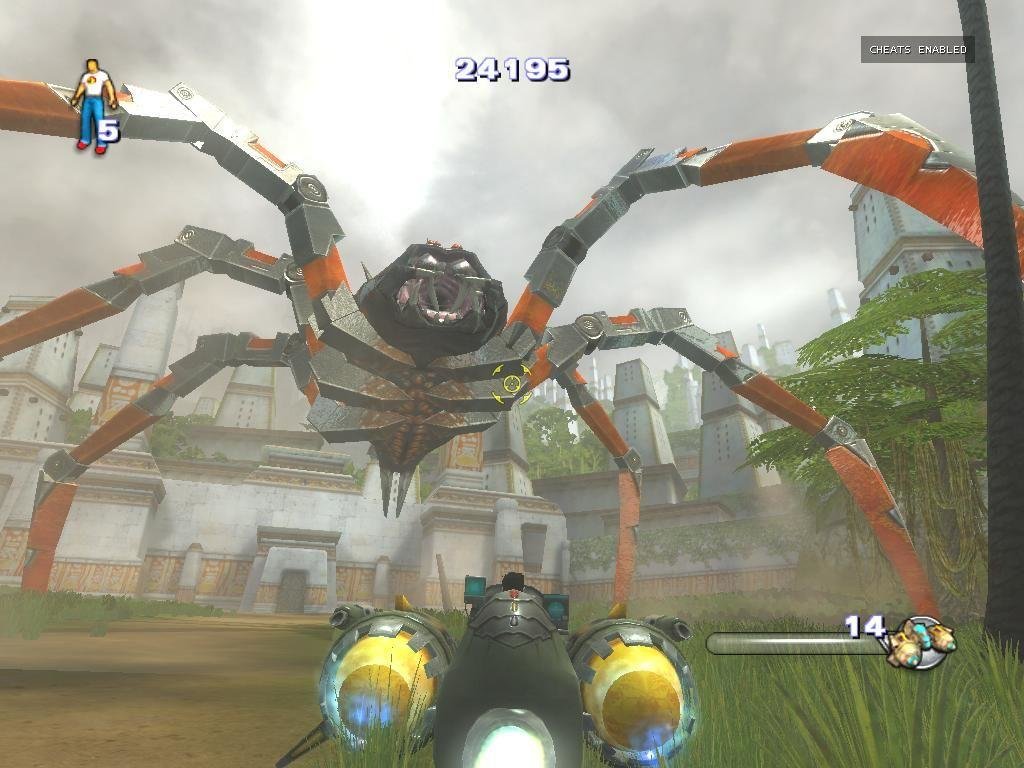
            Serious Sam 2 retains the structure of the original game, including the boosters and some of the platform elements from the Second Encounter.  There aren’t any real puzzles in this game (like the first two), but like the originals, you’ll have a few stages where you have to collect X number of items or find a switch or something to open up the next area.  Serious Sam 2 keeps the same gun designs (although they are styled differently) and adds grenades as a stand-alone button (fantastic).  Vehicles are also present in various levels, and I personally liked these segments, because they offered a different approach to the normal grind of ‘fight the hordes.’

Stuff like this isn’t awful, despite my aversion to vehicle segments in FPS games

Visuals

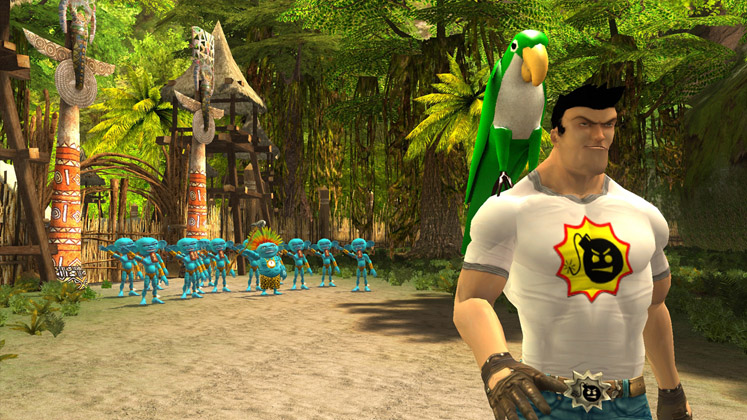
            Serious Sam 2 continues the tradition of having bright, wide-open areas for its levels, and the dial here is genuinely turned up to eleven.  While the first two encounters were centered in historical areas, Serious Sam 2 takes Sam to 7 different celestial bodies (six planets and a moon).  Loosely, you can define these as:  ‘Africa-like area, swamp, East Asia-like area, lava planet, snow planet, and sci-fi city).  Unlike the originals, you run into a variety of NPCs, and while I originally felt it strange how empty (outside of enemies) the original two games felt, I quickly grew tired of the goofy natives and their bobblehead-like designs.  They babble and occasionally talk, and it sounds like the dialogue (even the women) is the work of one or maybe two dudes.

Yes, this is a Saturday morning cartoon FPS

            The enemies in the game feature only a few returning monsters, although there are many that are similar to creatures in the first two encounters.  All of the monsters in the game are comedy set-pieces, and even the monstrous ones are usually comedically designed (the devil monsters feel like cartoon versions of Doom beasts).  The Beheaded Kamikaze from the original, which gave me conniptions, have springs for necks and serious bombs for ‘heads’.  It’s all just a bit bizarre, especially since the first two games, while peppered with ‘Duke Nukem moments’ still have a very grounded setting (although the settings in the originals were open, light, and colorful for the most part, unlike many prior FPS titles).

            Different from the originals, this game also features a bunch of weird ‘arcade’ elements.  There is a score tracker and a life system, with the game giving a pseudo game over when you run out of lives.  The penalty?  Your score gets frozen for the current stage.  I read this originates, like the cutscenes and more cartoon theming, from the Xbox remake of the original two episodes.  It feels tacked on and pointless, honestly.

Sound

           The soundtracks in this game aren’t bad, although there’s little that stood out to me.  Like with ‘the Second Encounter,’ I really started to enjoy the soundtrack near the end of the game, where they shifted to a more industrial, heavy metal track.  That aside, the sound design is straight derp, much like the monster and character design.  Guns sound normal, albeit unimpressive, but for instance, the kleer skeletons make sounds akin to hitting bowling pins when they die.  It’s not terrible, but it was just another instance of the game abandoning the more grounded settings of the first two titles for more slapstick.

            I’ve said it earlier and will likely say it again, but the voices in this game are terrible.  Aside from Sam, I think the other voices were done by two men trying their hardest to put on goofy accents or talk in high-pitches or babble-speak.  The dialogue is mostly limited to jokes, and while Netty has a dedicated voice actress, she has limited function outside of directing you where to go.

            I would expect this degree of goofiness and slapstick in, say, Conker’s Bad Fur Day, but it feels out of place in a Serious Sam sequel.

Story (4/10)

            Serious Sam 2 opens up with our hero, after the events of the first two encounters, being snatched up by a trio of siblings who have the look of cosmic beings.  There’s a lady with a weird voice and two old men with Jewish accents (not sure if this is exactly what it’s supposed to be, but they reminded me of Tommy Pickles’ grandpa).  They theorize that Sam is ‘the One’ (the first of many explicit and occasionally cringey pop culture references in this game).

            The mission is that Sam has to travel to five different worlds to recover the pieces of a medallion that can supposedly harm Mental, the overlord of the army sweeping across the galaxy.  The mission will take Sam to various worlds, where he will have to assist various bobble-headed locals (who are often caricatures of various cultures) and defeat several bosses.  These include a giant gorilla in an African-themed world, an obese Asian-styled ‘prince’ with a taste for cannibalism, a dragon who has kidnapped a hideous princess, a Kleer warlord, and a large bee.  Along the way, Sam is helped by Netty (NETRISCA), his AI from the previous game who is now able to speak with him.

            After reuniting the medallion, the three mystics (who are revealed to be living in a plain cabin) send Sam to a moon above Planet Sirius, the home of Mental.  Sam raids a prison, saving many of the locals from earlier in the game, and he shoots a laser at the planet.  He escapes to the surfaces but is tricked and apprehended.  He manages to escape once again with the help of ‘the Alliance’ (the resistance), and he goes to confront Mental at his pyramid.

(the final boss of this game is a pyramid)

Spoiler Zone

            Uhh, I can’t imagine there are really that many spoilers to be had in this game.  Really, the biggest spoiler to be had is the ending, where Sam is once again evaded by Mental.  Throughout the end credits, voiceovers express confusion that this is the end of the game, and a preceding cutscene showcases that the medallion Sam fought to create is one of many that the three mystics have in their cabin.  Over the course of the game, there are a variety of secrets, and while I stumbled onto a few of them, most of them are just extra stuff.  One spoiler involved a phone booth and receiving a call from “Sam in Second Encounter”, and since I’m fairly certain I remember seeing a phonebooth in the medieval stage, I liked that connection.

Reflection

            The ending, like much of the game, is a natural extension of the slapstick that is rife throughout this game.  The addition of more voice acting isn’t terrible, as Netty speaking winds up being pleasant after a while.  The ‘humor’ in the game is simply too much, and I think a big part of this is because it permeates nearly every aspect of the game, not just the dialogue.  As mentioned above, the humor filters into the art style, stage design, supporting cast, and enemy design.  All of the NPCs in this game are just awkward to look at, with alien-esque features but also sporting tropes from various cultural places on modern Earth, like the planet inspired by East Asian cultures where you fight kung-fu zombies and floating, cross-legged sensei-types.  The fairytale world is ruled by a king who is literally an Elvis parody.

            There are portions where the humor did make me chuckle.  The ugly princess made me laugh, as well as many quips from Netty.  The fact that I think all the NPCs were voiced by like, one dude who would do falsetto tones, likewise detracted from my enjoyment of this game.  I like to quip about ‘FPS games with stories’ and ‘those without.’  The first Sam games were plot-lite, but I think those were better experiences.  At first, I smirked at how goofy this game was – it reminded me of the humor in those old Black & White games (and British slapstick in general), but when every cutscene is a punchline (including bosses), it wore out its welcome.

Bias/Nostalgia Tint – “Zero cringy jokes out of five”

            No previous exposure to this title; have had it in my Steam library since the earliest days of my Humble Bundle account (my second bundle purchase!)

Overall: C-

Playtime

  • 12 hours (4/30-5/2/2020)

Achievements

  • Game has no Achievements/predates Achievements

Serious Sam (1st and 2nd Encounters via ‘Serious Sam Fusion 2017 [beta]’)

  • Original Release Dates: March 2001 (First Encounter), February 2002 (Second Encounter)
  • Remake Release Dates: November 2009 (First Encounter), April 2010 (Second Encounter)
  • Developers: Croteam
  • Publisher: Gathering of Developers (Originals), Devolver Digital (Remakes)

Summary

Starring ‘Not Duke Nukem’ ❤

Designed as an independent game over a period of a few years, Serious Sam incorporates elements of all the landmark titles of the almost-3D era of FPS titles into a fully 3D title. If Half-Life (which released a few years before Serious Sam) can be considered a new direction for the genre of shooting games through its emphasis on plot and immersion in a strange world, Serious Sam feels like an evolution of those earliest titles.

Serious Sam is a glorified shooting gallery, albeit with a freedom of movement that wasn’t quite actualized in many of the earlier titles that felt more like rail shooters. Featuring a manly man protagonist who spouts one liners and murders endless waves of alien monsters, Serious Sam tied together a lot of the tropes that made Duke Nukem and Doom mainstays in public culture.

What made ‘the First Encounter’ and its sequel different, however, is the fact that there are clear attempts made to create an immersive world. There are elements of lore, with an AI that provides you (somewhat meaningless) data on the weapons and monsters you find, while also providing you with hints on where to go next and details about your constantly evolving mission. Unlike the cramped corridors of a moon base, Nazi fortress, or a secret, underground science facility, Serious Sam mostly plays out in large, open areas in various historical cities. While the environments are nothing more than that (scenery), they nevertheless provide a stark contrast to the grimy and dark games from which Sam draws most of its inspiration.

Anyone who is a fan of FPS titles should be able to draw some entertainment from the First and Second Encounters. While I personally wish the titles would have been about a third or so shorter than they were, I don’t regret finally sitting down to play through both titles for the first time in close to two decades.

Technical/Presentation (7/10)

Gameplay

Serious Sam is one of the kings of the FPS sub-genre of ‘murder everything with extreme prejudice (and gore)’. In many ways, it is like a three-dimensional version of Contra III or like one of those arcade games where you just spam all the joysticks to try and murder everything on the screen before it can get to you. The game came out in 2001, so I’m not sure it originated anything unique on the 3d FPS stage, as this was a few years removed from landmark FPS titles like Half-Life and Quake and shortly before the genre went full-tilt into war nostalgia with the advent of the Call of Duty and Medal of Honor franchises.

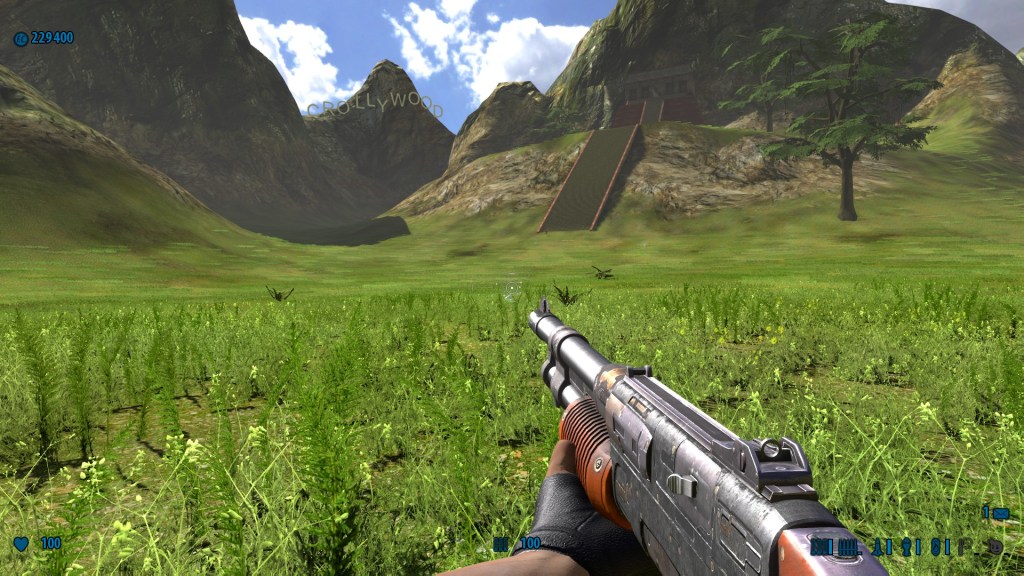
GET IT, ‘CROLLYWOOD’????

One thing worth pointing out that the game has that feels a few years ahead of itself is the in-game AI. NETRICSA is a computer system that’s implanted into soldier’s brains and acts as Sam’s method of translating languages, figuring out where to go, and even providing lore information on weapons, locations, and the various enemies that you murder. It also tracks stats like secrets you’ve found, enemies killed, time taken, etc. While nothing stood out to me about this in the First Encounter, I did notice that the ‘Netty’ blurbs had a lot more personality in the Second Encounter.

The gameplay itself is straightforward. Sam has health and armor, and he has an assortment of weapons that he uses to murder a variety of alien forces. All of your standard FPS weapons are here—pistols (dual wielding, of course), shotguns, machineguns, and rocket launcher.  The First Encounter tops is off with a laser gun and a cannon (a literal cannon that fires literal cannonballs). The Second Encounter fleshes out the assortment further by adding a sniper rifle, flamethrower, and the ‘serious bomb’, which functioned much like the BFG in Doom in the sense that it would murder everything on the screen with extreme prejudice.  The game lets you jump and look up and down (as enemies will come at you from all angles) but concepts like crouching or hiding simply hadn’t been invented yet… plus Sam ain’t that kind of guy. It is worth mentioning, however, that the Second Encounter did have a handful of platforming elements, which did provide a needed wrinkle to the experience.

The Second Encounter adds a handful of powerups that temporarily boost speed, strength, and life, and while there are many (many) secrets that are nestled away throughout both titles, there’s no real incentive to try and track them down.  Like many other FPS titles of the time, most of them are concealed very well, and the lack of any sort of genuine completion bonus renders it moot when you know you really just want to keep running and gunning your way through alien hordes.

Visuals

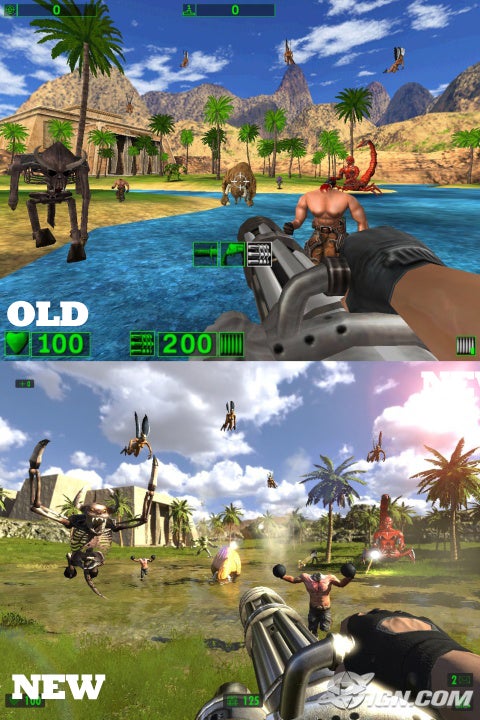
I played the original version of this game at the time of it’s launch, and for the purpose of this writing, I played the HD remakes that came out in 2009/2010.  I’m also aware that there are VR versions of both titles that released in 2017 but I have no idea what the graphical fidelity might be for those.  In terms of both versions, they match the time period, although I think the original aged pretty well.

I think this was a Shakespeare reference

For it’s time, I believe Serious Sam was one of the first FPS titles to really provide the player with wide-open worlds, compared to the smaller passages and claustrophobic spaces of earlier titles in the genre. Both the First and Second Encounters do a nice job providing a fun (if nonsensical) backdrop to the action playing out around you, as the set-pieces of Ancient Egypt, Mesoamerica, Babylon, and Medieval Europe give you just enough backdrop without infringing on what you bought the game for (murder).

The effects are also great, as the weapons rip and tear their way through enemies in engrossing fashion. Naturally, the HD remaster can pull off a lot more in this regard, but I did think they could have done a little more. After a while, the static death animations become less amusing, and this was long before most enemies showcased wear and tear.

Sound

The sound in the game is nothing much beyond the tracks that play in the background. Sam is voice acted, but he’s input is relegated to a dozen or two one-liners when you pick up guns or get through a particularly difficult set piece of monsters or platforming. The music itself is up and down, with some titles feeling great and others quickly growing repetitive. I did enjoy the Mesoamerican background music from the Second Encounter, as well as the Christmas-esque music from the snowy subsection of Medieval Europe. There’s a section where the background music is a somber, slow version of Jingle Bells, and every time you enter combat, it ramps up to a heavy metal version of the track.

Story (5/10)

Serious Sam is story-lite in almost every sense of the word. Sam ‘Serious’ Stone is the Earth’s greatest soldier (one who apparently feels zero need to wear visible armor), so he is picked to go on a dangerous mission through time to save the future from an unknown villain named ‘Mental’, whose forces have gradually pushed humanity to extinction.

Sam’s journey starts in Ancient Egypt, where he has to collection various artifacts to find a way to locate and fight Mental. In the Second Encounter, his journey continues in ancient Mesoamerica, ancient Babylon, and into medieval Europe, where he is trying to locate the Holy Grail of legend. Along the way, Sam is confronted by increasingly difficult waves of Mental’s forces, but he manages to slaughter his way through them, including various lieutenants, all while plopping out the contractually obligated one-liners.

Spoiler Zone

It’s difficult to provide anything akin to a spoiler for a game that has very little plot to spoil. Sam is the only character in the game, and he feels like a next gen Duke Nukem in almost every sense of the word (just try and remember a world where Duke Nukem Forever had yet to release). Sam doesn’t have the same flair as Duke, though… at least how I remember Duke. Sam’s quips are few and far between, and while he occasionally makes a reference to some pop culture (whistling Indiana Jones and shouting ‘Goood morning Babylon!’), nothing really zings or lasts. The sole exception to this is a line that stuck with me from my youth, and that’s from the winter zone. Sam exclaims ‘Damn, it’s cold, my nipples are hard like pencil erasers.’ That line made me crack the hell up as a young teenager, and even as a jaded old person, I snickered.

Reflection

(From IGN) I played the old version as a teen and, yea … the remake is pretty

Serious Sam had slightly more plot than Doom, but there’s not a whole lot to say about the story elements in these first two titles. Yes, they exist, and you do get a degree of world building through the AI in Sam’s brain and the information and quips it provides about the locations, weapons, and monsters. But honestly, I can safely say I never played the game to be engrossed in your standard science-fiction shooter. The fact that it’s transplanted into ancient elements doesn’t really add anything to the plot, because you could have just replaced those backdrops with anything without fundamentally altering the experience. 

The core game doesn’t deviate much from the schtick of ‘kill monsters, progress through mostly linear stage with some frivolous secrets, and located object X, Y, or Z.’ Since the same thing can be said about most prolific FPS titles, I can’t damn the title too much, but this was also around the same time that stuff like Half-Life and Halo were either in the market of close to hitting it, and Serious Sam feels closer to the 90s than the 2000s when it comes to FPS design.

Bias/Nostalgia Tint – “Three pencil erasers out of five.”

I owned this game, and it’s one of the earliest pc games I can remember playing and genuinely enjoying.  I believe it’s one of the earliest Steam purchases I made as well, as I got the whole series as one of the original Humble Bundles (it’s still weird to think this game started out as an indy title).

Overall: C+

Playtime

  • 6 hours (First Encounter)
  • 7 hours (Second Encounter)
  • Time frame: April 15 to 20, 2020

Achievements

  • 28 achievements on one playthrough (About 38% of Fusion’s total achievements)