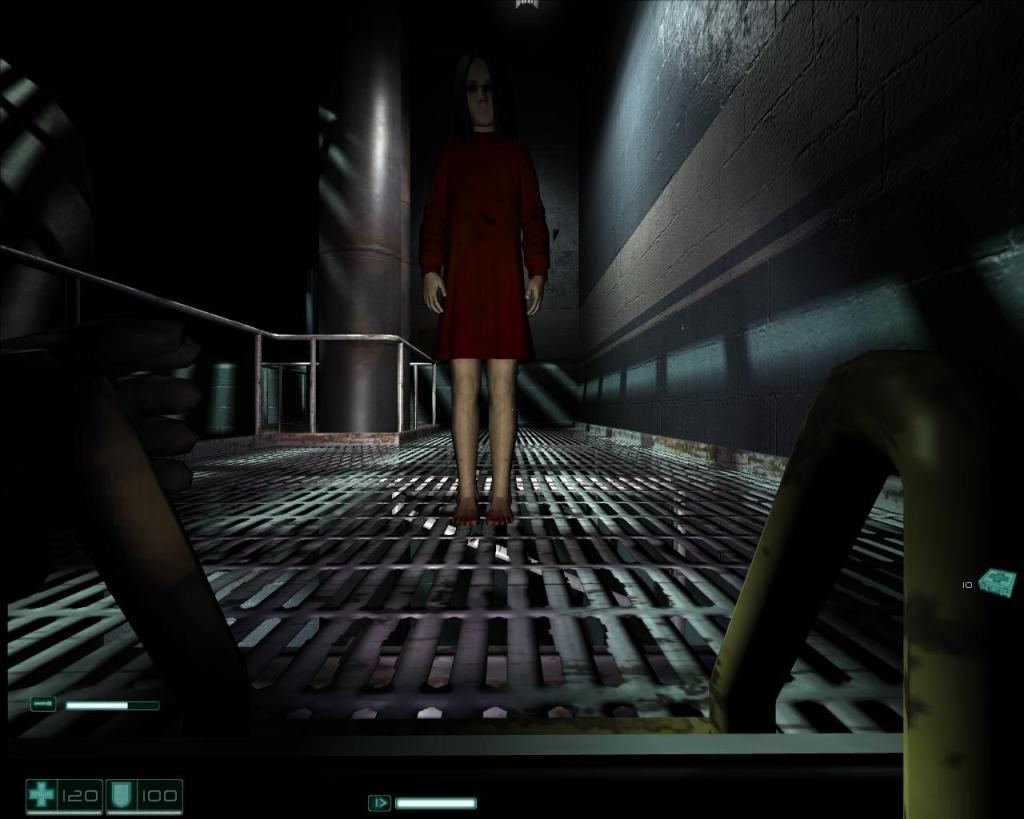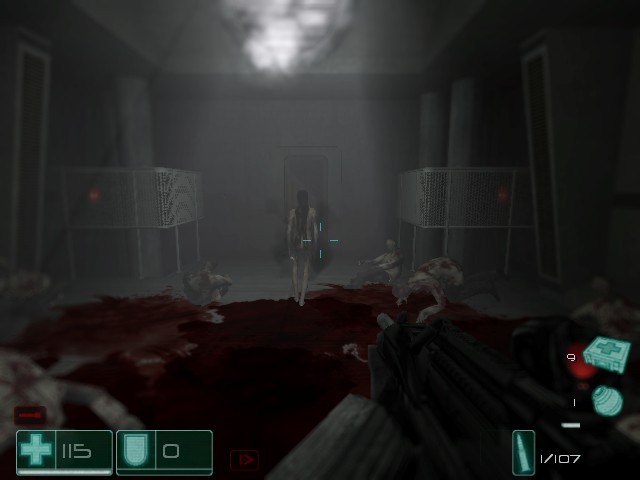
F.E.A.R. 3

  • Original Release Date: June 21st, 2011
  • Developer: Day 1 Studios
  • Publisher: Warner Bros. Interactive Entertainment

Summary
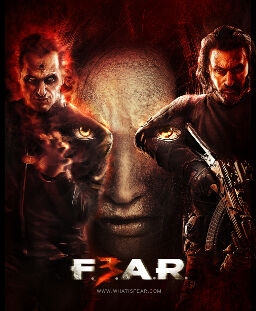
Do you like guns?  Do you like ducking and shooting guns?  Do you like running and shooting guns?  Did you dislike all those dark and cramped spaces?  Did you hate the all the spooky noises and paranormal experiences of the first two games?

            If so, then FEAR 3 is the game for you!

            Released a little under half a decade after its predecessor, FEAR 3 (‘F3AR’) was made by a new developer (Day 1 Studios) for reasons that I couldn’t quite dig up through a few minutes of attempted internet research.  Whether or not this hard a big effect on the game’s philosophy or not, there is a clear departure from the prior mainline entries.  FEAR 3 brings back cover mechanics, but it features very little horror elements.  Please bear in mind I didn’t think the previous titles were genuinely scary, but they still made efforts to build an atmosphere of unease and dread through environments, sound design, and occasional jump scare-esque bits.  None of that is strongly present in FEAR 3 (at least compared to the first two), which forgoes some of the design principles/hallmarks of the previous two entries to focus mostly on gunplay and co-op.

            If you’re adept at Call of Duty or any modern shooter that relies on cover to survive, you’ll get the hang of this game quickly.  For me, it took about half the game before I found a groove, but even then, the game was more challenging than the second title.  It doesn’t help that there were many occasions where I got murdered despite being in cover.

            I was unable to play multiplayer or co-op, but everything seems to indicate that they were both reasons for people to play this game on release.  Local co-op allowed two people to play as Point Man (your standard commando type with bullet time) and Fettel (a ghost with mind powers who can possess enemies) simultaneously and even compete through challenges (again akin to Call of Duty).

            In the end, FEAR 3 appears to be a serviceable co-op FPS, possibly akin to how Resident Evil 5’s multiplayer made the game less awful.  I’m unsure how popular multiplayer for it may be, but it was apparently enjoyable in that regard as well.  Unfortunately, the game falls short in furthering the ‘legacy’ of its predecessors and seemingly cares little about expanding on the grim, dark world that defined the franchise.

Technical/Presentation (5/10)

Gameplay

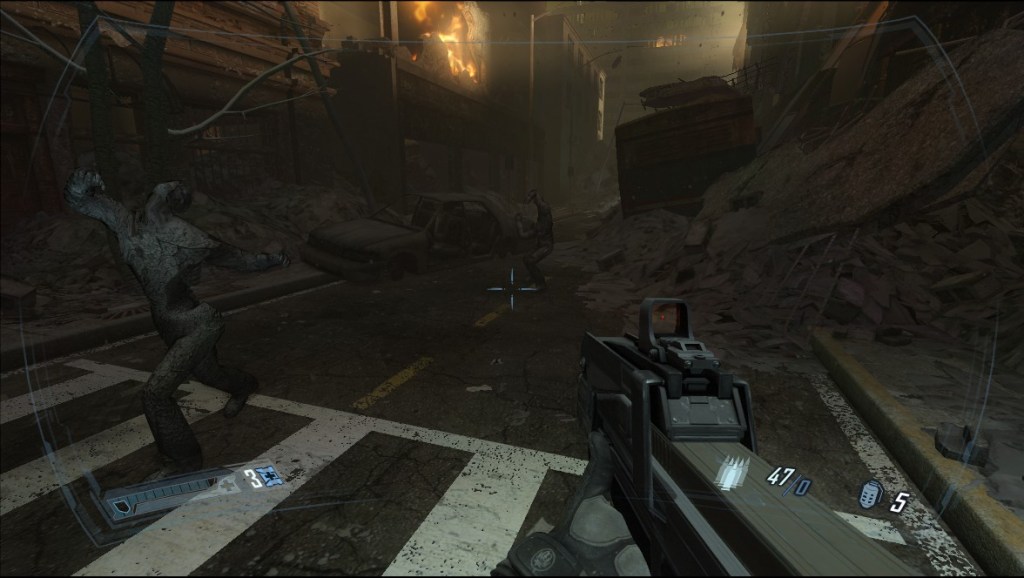
            Well, it goes without saying that there are some drastic… shifts from the gameplay presented in the second entry in the trilogy.  The HUD elements are vanished, along with collecting anything outside of grenades, ammo, and certain items that boost your score.  Yes, there’s a score-type system, where the game presents you with various challenges throughout each Interval.  Completing challenges boosts a score, and at certain thresholds, you will rank up and unlock new abilities and/or boosts to health or reflexes/psychic power.  Cover is a major aspect of this game, with specialized controls for maneuvering around cover, as well as peeking around cover serving as an important function.  This, combined with the leveling via mass homicide through ingenious means system makes this game feel very Call of Duty-esque.
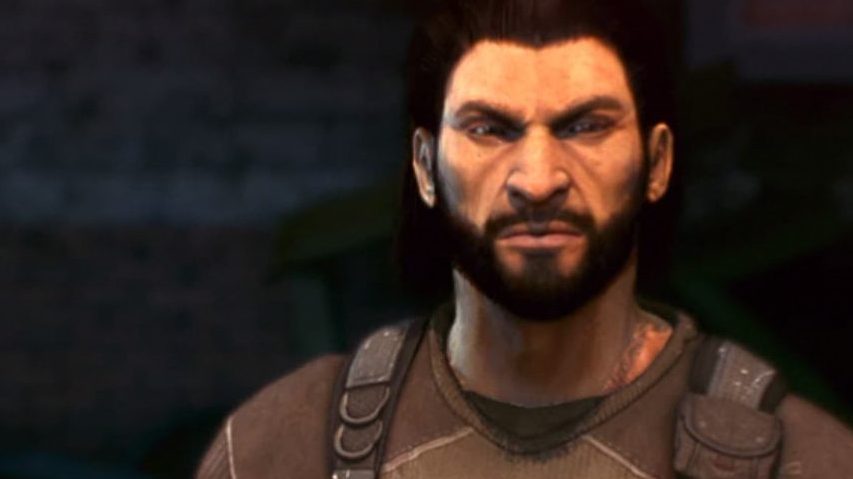
They kept Point Man mute, and I can’t help but feel like, given how everyone else speaks and how visible he is during all the scenes, that is almost makes the game feel more comedic than intended.

            The game presents you with two characters—Point Man and Fettel.  One is the protagonist from the first game, with his slow-mo powers and access to two (TWO) weapons at a time.  Fettel can’t use weapons, but he can possess enemies and use a variety of psychic powers.  Fettel is unlocked for a level once your clear it as Point Man.  The game boosts a co-op where you and a partner can play as both characters at one time and compete to complete more challenges.  I feel like this co-op is at the heart of the game, and in many ways, it might be the best-selling point for what is otherwise a Call of Duty-style arcade shooter.

            I can’t stress enough how much of a departure this feels from the original.  You can sprint almost endlessly, and that’s coupled with the fact that your score is impacted by your time.  Along with that, health regeneration kills a lot of the suspense and dread that usually comes with spooky FPS titles.  If I can just wait until my health is full before moving on, I don’t have to worry.  On the other hand, I constantly had to worry about cover, because there were so many occasions where I would crouch behind cover and still get shot to (almost) death.  While I liked the handful of mech driving moments in FEAR 2, I thought it was a bit overdone here.  Again, it might be the fault of regenerating health, but these moments just felt like filler with close to zero stakes (like much of the game).

            Again, I unfortunately can’t comment on the co-op or the multiplayer, which I didn’t experience.  Some research told me that there’s a lot of variety there and a lot of fun to be had.

Visuals
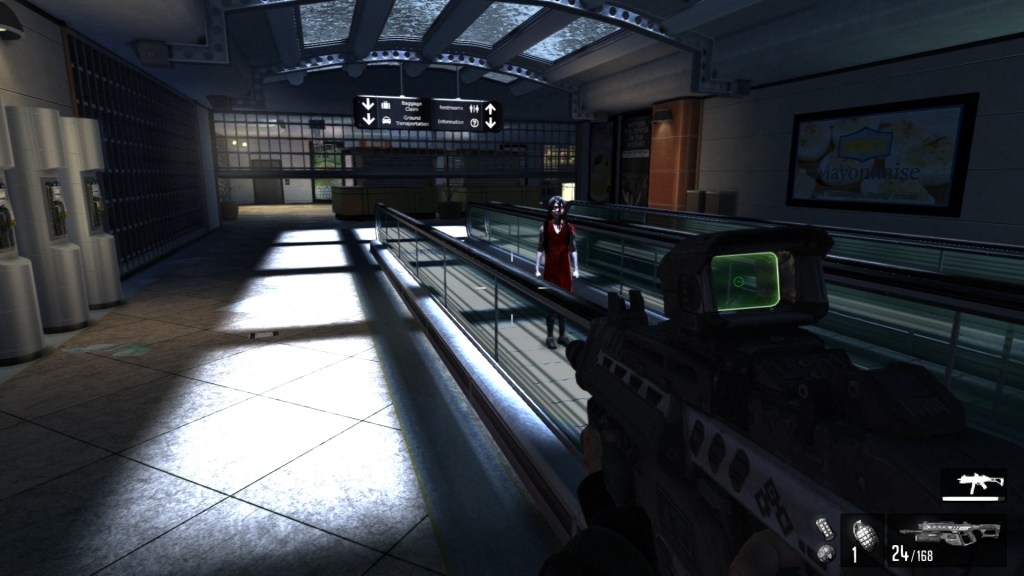
This game looks great and has some really nice set pieces, but the actual scares aren’t as frequent as they were in previous titles

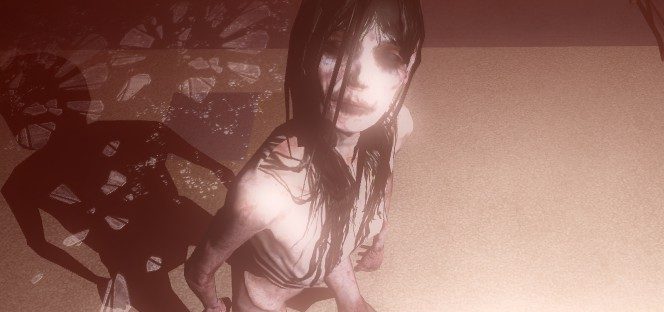
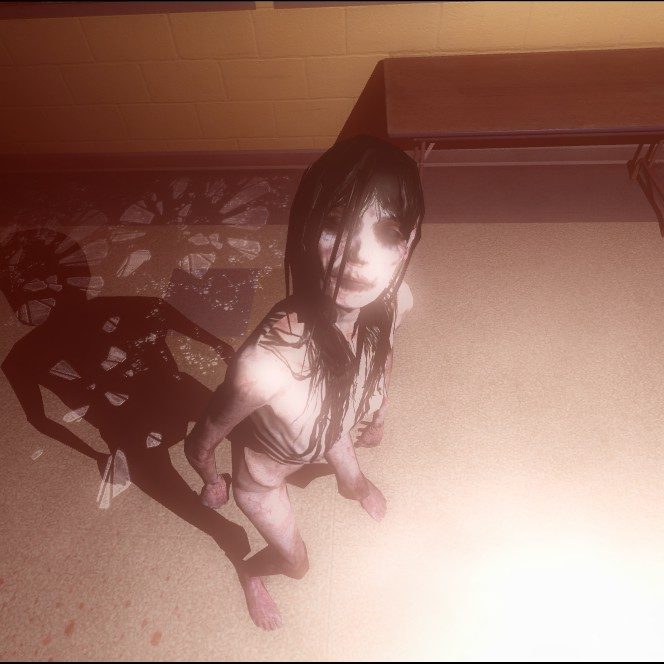
            The environment resembles what you would expect from a title in the early 2010s.  In a divergence from the previous titles, I’d wager that the majority of this game takes place in open or semi-open spaces.  Even the stages built around navigating inside tend to be large spaces (like the supermarket or the bridge) that stave off any sensation of claustrophobia that you may have felt in the first or second game.  The horror is almost entirely absent in this game.  Alma still pops up, and there’s another menacing creature that stalks you from time to time, but aside from a few subtle moments and some jump scares, there’s little horror in this title.  Occasionally, you might feel a bit of sensory overload but the horror’s gone.

            On a side note, it’s worth saying that while the environments aren’t half bad, the characters in this game look terrible (at least to me).  Something just seems off about all of them.  The proportions just seem weird… as if they were trying to make them look a little cartoony, almost.  I prefer the character designs from the first game, even if the graphics engine couldn’t render the same degree of detail. 

Sound

            The soundtrack in the game isn’t terrible, but there’s nothing that stood out to me.  For this series, that’s slightly damning, since I enjoyed the soundtrack in the original, and while the sequel wasn’t as good, it still had some nice remixes and original music.  Having just finished this game, I can’t say that anything stood out to me, because most of the time is spent running, crouching, and shooting at enemies.  I do enjoy that the enemies talk a lot more than they did in the second title.  The guns and all the other sound effects felt a bit muted, which made it a little less satisfying to slaughter people.  As the focus is more on action and less on horror, the title also doesn’t do quite as much with environmental noises, outside of the supernatural occasionally screaming or throwing stuff around.

Story (4/10)

            The plot of this game is awful, both in terms of the pacing and the overall satisfaction of the story.  The story of FEAR 3 opens up about eight or nine months after its predecessor with the Point Man (the protagonist from the original game) in a prison.  He is rescued by his brother Paxton Fettel, who one of the main antagonists in the first game.  The two don’t trust each other but agree that they need to head back to Fairport, the setting for the first two games.  Fairport is still the center of a paranormal clusterfuck, and Armacham is still working very hard to cover up their mistakes that led to the whole city being ruined and its populace either dying or degrading into mindless lunatics.
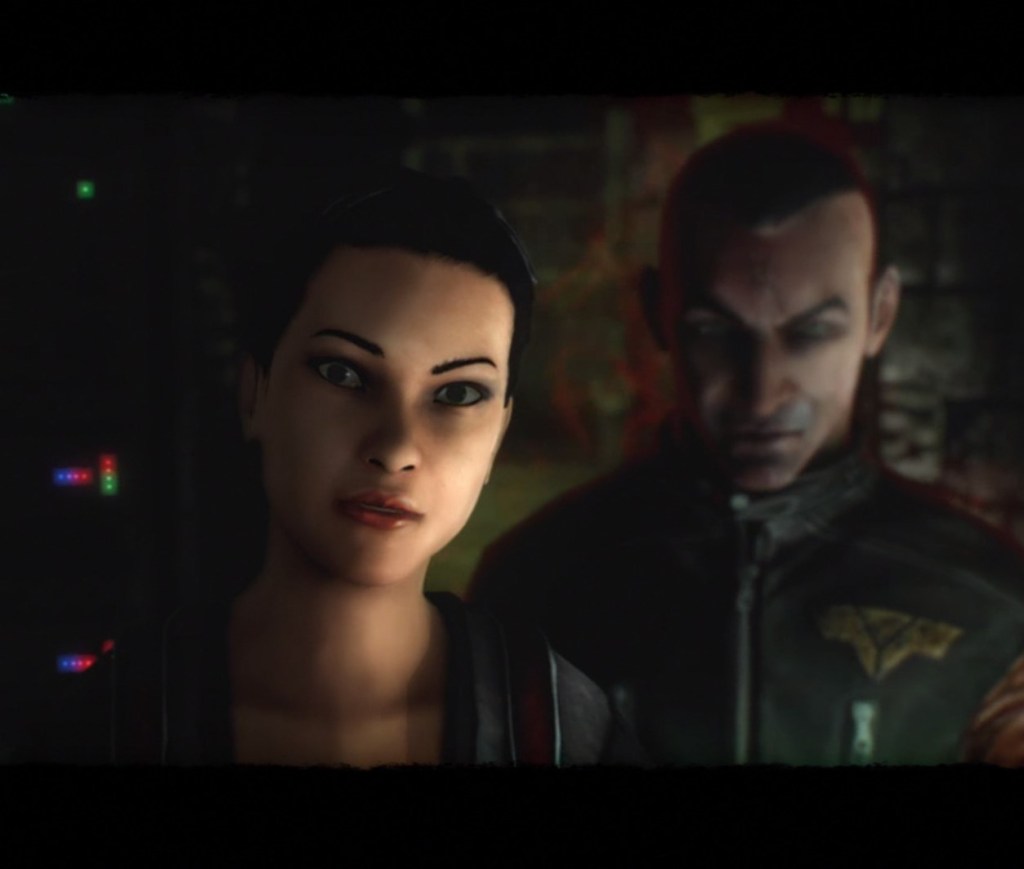
Returning characters! All that fresh continuity!

            The brothers get in touch with Jin Sun-Kwon, one of the survivors from the first game and a squadmate of the Point Man.  In a brief reunion, she points (some humor) Point Man in the direction of Michael Bennet—the second game’s main character—who is being taken away by Armacham security.  Bennet apparently had a very unpleasant (for him) run-in with Alma, the series’ iconic scary ghost girl/woman.  After losing Bennet, the brothers murder there way to Bennet and then onward to Alma, where they are able to resolve form long-standing issues with their father, the late Harlan Wade.

Spoiler Zone

            I’m not sure why they took the Point Man to Brazil, but they did.  After being confused why the people were talking in not-English, a Google search told me they had taken him to Brazil rather than just killing him.

             As I mentioned above, the plot is just awful, and I believe they exacerbated that by removing lore objects from the game.  The closest thing this game has to story building are the occasional comments/witty retorts from Paxton Fettel, who is this game’s version of the Cheshire Cat and evil conscious.  He has a Vegeta-tier widow’s peak to complement the perma-scowl and cave man appearance of his brother, the Point Man.  Despite having a face, the Point Man uses it to only scowl, as he has no spoken dialogue in the game (I believe that his child version doesn’t speak either).  They don’t state if this is something intentional or not, but I can’t believe he’s incapable of speech, since he was apparently in the army before the events of the first game.

            Anyway, there’s very little story that unfolds across the game, which is shorter than the original or the sequel.  The game does have narration and cut scenes, but these are almost entirely used to showcase the pair of protagonists as children.  There’s allusions to other stuff going on, but it’s hard to tell how wide-spread the situation in Fairport is/has become.  Is it global?  Is it regional?  Is it just this city?

            As I’ve mentioned in prior reviews for the series, it was hard for me to really villainize Alma (with the exception of the end of the second game).  In this game, she’s pregnant, and her contractions are the source of much of the psychic disturbances across the various stages.  The two characters are going to find their mother.  Along the way, they locate Becket, who doesn’t offer anything new to the player before getting exploded as a by-product of Fettel possessing him. I felt a bit bad for Becket, who earlier in the game was on the edge of lunacy over being raped by a psychic ghost.  There’s nothing given to explain how he was rescued/extracted, and you don’t hear about the fate of Aristide.  If her plan was to contain Alma, she seems to have failed.  Even so, Alma is little in this game beyond Young Alma popping up in mostly non-threatening moments. 

            There’s a generic faceless monster-looking creature that serves the purpose of jumping the player (like Alma in FEAR 2), and you later discover that this is a psychic manifestation linked to memories of Harlan Wade.  It isn’t that he’s still alive, but the memories of him have coalesced into this sinister monster that scares Young Alma and threatens the protagonists until they kill it as the final boss.  Then you get an ending based on which brother had a higher score.  As I did single player as Point Man, I got the ending where he kills Fettel again, saves the baby, and watches Alma vanish.  Fettel’s ending has him possess Point Man, take the baby, and devour Alma for ‘unlimited power’ I imagine.

Reflection

            In many ways, this game feels like a major disappointment for this franchise.  The story is barebones, with little additional information to uncover and little done to flesh out this collapsed/post-apocalyptic city.  This game was 100% not designed to be an engrossing single player experience, and that much is clear from the variety of decisions made in regards to central gameplayer mechanics.  There are no new characters in this game, and the characters that are throwbacks to the previous titles feel almost more like fan-service or plot dumps (look, its Jin! Hear her tell you what to do next!  Okay, now she’s gone again) than actual people.  It doesn’t help that the game stripped out all the horror and foreboding environments from the first two games.  The ending itself adds a nonsensical cherry on top.

Bias/Nostalgia Tint – “Zero ghost babies out of five.”

            This was my first exposure to this game in any sense of the word.

Overall: C-

Playtime

  • 5 Hours (4/11-4/12/2020)

Achievements

  • 13/50 (26%) in one playthrough
F.E.A.R 2: Project Origin

  • Original Release Date: February 10th, 2009
  • Developer: Monolith Productions
  • Publisher: Warner Bros. Interactive Entertainment

Summary

FEAR 2 is a sequel to a game that, despite me thinking it some kind of sleeper title, was a “Best of…” winner for many publications.  The original even scored in the high 80s and low 90s  (the PC version, at least), so the original had some splash when it came out.  After two expansion packs that provided a ‘more of the same’ experience, the sequel dropped roughly four years later.

One thing I learned after completing this title is that it was designed with consoles in mind.  As I mention in the more verbose portions below, I believe that ideology may have led to a bit of streamlining in the game design.  This isn’t to say it’s a shallow title, as I actually prefer the sequel to the original, but I can recognize that there may be components missing here that fans of the original may have raged about on release.  Elements like tilting are gone, and there are additions like the in-game PDA which houses lore and tutorial information.  You can, however, interact more with objects (pushing and knocking around heavy objects as cover). The worst thing, however, is that the enemy AI feels almost dumb in this game, and that makes combat a lot less tense.  This opens the game up for more horror elements, but depending on what type of person you are, you may hate the shift in emphasis.

The game is a little brighter than the original, but I liked that, because they populate the environment a lot more in this game—at least in terms of the abandoned city block segments.  I believe the biggest knocks I can have here are a lackluster use of sound (relative to the original title), and the fact that the game is almost too easy on the standard setting.  I don’t attest to be an FPS master, and the original FEAR game had me dying every now and again.  I believe, in my entire playthrough of FEAR 2, that I died maybe twice in gun combat, with a few other deaths from poorly placed grenades.

The story here starts as a side tale, with the first chapter running alongside the last Interval of the original.  From there, it takes you on a journey that further fleshes out some of the characters and buzzwords mentioned in the first title, all the while building up to one of the weirdest and most unsettling endings I’ve seen in an FPS title.

All said and done, FEAR 2 might be a step back for some who preferred the heavier focus on gunplay and dark environs of the original.  In my mind, the bit of streamlining, while it made the game a bit too easy, made for a slightly better experience.

Technical/Presentation (6/10)

Gameplay

It’s similar but different relative to the first game. While it follows the same concept of murdering your way through mostly tight quarters, collecting lore pieces, and avoiding scares, they rejiggered the control scheme a little bit.  The biggest thing that stuck out to me was that they made the flashlight the F button (and not the X button).  The first game was very dark a lot of the time, and my hand just could never pull off that slide during combat.  The ‘use’ button is now E, which means that this game got rid of the tilt/lean from the original.  I can’t say I was heartbroken by that, since this game doesn’t really need that feature (FEAR 2 is easier than the original).

The biggest departure/addition is that lore comes in the form of collectable objects that are uploaded to a PDA (which is in the protagonist’s helmet/augmented reality glasses).  Objects you can collect (lore, ammo, health, armor, boosts, etc) are outlined by the protagonist’s HUD, so it’s easier to track things, although the game tells me I still missed about a third of the lore objects.

I read somewhere that this game was designed for consoles, and while it doesn’t stick out like a sore thumb, it definitely made some of the small changes make sense to me when I learned that.

Visuals

I admittedly have a soft spot for post-apocalyptic cityscapes (as well as during-apocalyptic cities) c

The sequel looks nice for late-2000s gaming, and given the five-year weight, it looks nicer than the original (which is something you hope for).  FEAR 2 is a little less dark (aesthetically) than the original game, but there are still segments of the game where you need to rely on the flashlight.  The flashlight no longer runs out of charge, like in the original, but there are many points where the game will flicker the flashlight (a la your standard ghost film).  As mentioned above, there’s a new HUD that adds a layer of polish to the game and creates an in-game repository for tutorials and lore objects.  As someone who loves picking up nuggets of story, this was in my wheelhouse, but I can imagine some fans of the original might prefer the original’s toned-down approach.

On a final note, I just want to point out that this game follows the same checklist of stages as the original.  You got abandoned/destroyed city blocks (although they are amazing and so much better in the sequel, as the devs could populate a lot of the empty space), a pair of high tech-y facilities, and the classic subway and underground tunnel combo.  There is a level in a very large elementary school that was a fun divergence from the normal FEAR schtick.  All in all, I personally thought the game was a step-up from the original in terms of visuals.

Sound

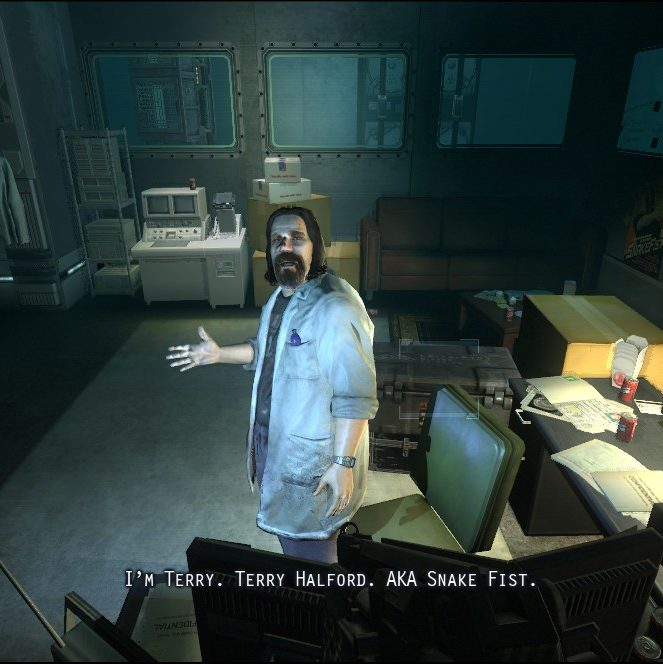
Not-Mick Foley here plays the important role of nerd comic relief in this game

Par the course when it comes to the sound category for this game.  This is the one ‘meh’ area for me, because there didn’t seem to be anything improved upon from the original here.  I even caught them using tracks for the original (maybe they were remastered or remixed, but it doesn’t change the fact that it was recycling).  Sound effects were all right – I can’t complain too much.  I did miss the vocals from the first game, as the enemies in this game just sound a little less menacing and a little less ‘real’ than the replicants in the first game.  While there were more characters to engage with, the foes felt wooden, even though I preferred the approach to the supernatural foes in this game.

Story (7/10)

The story in this game touches upon some stuff mentioned in the original.  You’re a member of Delta Force (the support group in the original FEAR).  The two expansion packs are, apparently, noncanonical, so we have no clue what happened to the Point Man from the first game.

The second game’s silent protagonist is Sergeant Michael Becket (the token jagoff in the group calls him Bucket, which amused me to no end).  He and the squad he’s part of are raiding the residence of Genevieve Aristide, who was mentioned in the first game as a shadowy villain.  The first chapter ends with the same catastrophe at the end of the original game (city go boom for ‘reasons’), and the protagonist wakes up in a medical facility where Aristide and a guy named Snake Fist sound off in the comms to try and get his squadmates to help them. Aristide is being targeted by her own people to cover loose ends.

Yes, this was around the point where the game started to make me feel increasingly uncomfortable …

From there, the plot takes the protagonist on an extended jaunt through the destroyed parts of the city as he chases Aristide, Snake Fist, and a way to deal with Alma.  In standard grim FPS fashion, characters meet varying degrees of gruesome fate as the silent protagonist marches onward, seemingly invincible, to his final destination.  Like the first game, there’s a sassy female solider (Lieutenant Stokes), but in FEAR 2, she takes the role of the deuteragonist.  The ‘out of shape nerd’ trope that was Norman in the first game is filled by ‘Snake Fist’ in the sequel.  New to the game is also your trope of a crewcut-clad military hard-ass, who takes the form of Colonel Vanek.

Spoiler Zone

So the plot this time around sees Becket and his squad as part of Project Harbinger, which is an ATC initiative seeking to train/convert people into psychic commanders like Fettel.  I believe that the people aren’t aware they’re in the program until they’re converted, which happens to the squad after the opening mission, when they are knocked out by the Point Man blowing up the Origin Facility.

After conversion, the squad all get the reflex powers like Point Man, but they also become bigger targets for Alma.  Becket, who lore mentions was one of the stronger candidates (along with his squad mate Keegan), gets tricked by Aristide into entering a TAC chamber, which further amplifies his physic powers, making him a massive target for Alma and the replica soldiers.

The surviving squad mates gradually go bonkers before being taken/killed/ ‘consumed’ by Alma.  A piece of lore mentions that Lieutenant Stokes was a communications officer attached to the squad and not a part of Harbinger, which I imagine meant she wasn’t surgically modified.

Like I mentioned earlier, the game follows similar level layouts to the original.  It also continues the trope of having frequent nightmare/hallucination sequences.  Here, it’s made clear that this is Alma trying to overwhelm the person, with the intent of driving them mad and/or making them susceptible to her ‘consuming’ them.  The game has Alma frequently assail the protagonist, which makes you click the mouse buttons to shake her off – I imagine this would be akin to mashing buttons on a console controller.

After crashing into the subway, Keegan goes loopy and wanders off – Stage B of Alma-in-Head syndrome. Becket gives chase but can’t find him as they eventually make it to the nuclear reactor (also owned by ATC and supposedly abandoned).  Inside, Stokes and Becket activate the machine only to have a wounded Aristide reveal that she wants to use Becket to trap Alma.  Stokes gets shot for protesting this plot, and Aristide seals the psychic chamber with Becket and Alma inside.  A final nightmarish sequence follows where you have to fight off Keegan (who screams about ‘why didn’t she want me’) to throw some switches.

… and by this point it is far too late to escape this glorious horrifying train wreck.

After seeing most of their squad offed in one way or another, Becket, Keegan, Stokes, and Morales head to an elementary school to rescue Snake Fist.  The school, also run by ATC, is a front for experiments on children, and despite murdering everyone in his way, Becket gets to Snake Fist and talks for all of three minutes before assassins kill him.  It is revealed that Snake Fist wants Becket to super charge himself and kill Alma, using a machine at a nuclear station.  Meanwhile, Aristide wants to contain Alma, which Snake Fist believes is nearly impossible.

Nevertheless, the final sequence shows a pregnant Alma standing in front of Becket and putting his hand on her stomach.  Sequences during the Becket fight show Alma moaning and some other very suggestive stuff.  So the game ends with the protagonist being strapped into a machine and raped by a ghost (and I thought the first game had some messed up undertones).

Reflection

I think it’s clear that they wanted to make storytelling a bigger part of the experience with the sequel.  After all, there are more characters in the game, and unlike the original, there is at least effort made to give them a little background information (Harbinger files on them), and they at least serve plot devices outside of telling you where to go and dying when appropriate.  I appreciated that they made it a little easier to collect all the lore bits, since this is still an FPS where you only get the skeleton of the plot by gunning and running your way through the various tunnels and derelict scenery.  That said, the skeleton here is more complex than in the sequel, although I imagine that may have come at the cost of streamlining parts of the experience to fit onto the console market.

In the first game, I frequently found myself questioning whether or not I should root against Alma, given her tragic story.  The sequel provides little to move the needle honestly (aside from the bit at the very end, which was mortifying for me).  Characters call her the apocalypse and say she’s a threat, but most of the people labeling her are the same ones that created her.  There’s a line in there about ‘we create our monsters,’ and I think that’s an apt sentiment.  With that, I’m curious to see how the sequel attempts to wrap up the storyline and if there’s any effort made to weave together the two games (the fate of the Point Man is still unknown, given the noncanonically nature of the expansion packs).

There is a DLC for this game, but Steam wanted me to pay 50 dollars for it, and I ain’t got time for that.

Bias/Nostalgia Tint – “Zero free pizzas at an anime convention out of Five”

This game has sat in my Steam library since I got it through one of the earliest Humble Bundles that I purchased.  I booted it up six years ago (and apparently let it run for a day) and never got passed the first sequences.

Overall: B

Playtime

  • 5-6 hours (April 7th to 8th, 2020)

Achievements

  • Game predates achievements

F.E.A.R. (First Encounter Assault Recon)

  • Original Release Date: October 2005
  • Developer: Monolith Productions
  • Publisher: Vivendi Universal Games, Warner Bros. Games

Summary

FEAR was a game I had in my ‘pc library’ (which was likely a bookshelf or a plastic bin) as a teenager.  I have only the vaguest impressions of playing the game and can’t remember if I finished it (I probably did, I was usually good at that).  In my brain, it’s overshadowed by a few other FPS titles that came out in the same early-to-mid 2000s-time frame, like Max Payne (technically third person but the concepts pervaded the FPS genre enough), Serious Sam, and Metroid Prime.  I regret to inform that I barely touched Half-Life near its original release (non-intentionally).

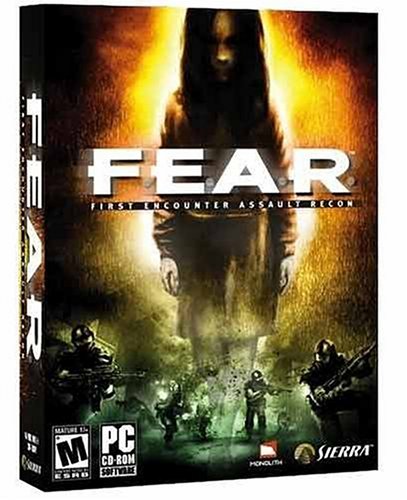
Back when PC games came in layers upon layers of cardboard

FEAR settles very well into the mold of FPS titles in the era between Doom II and the modern era of yearly Call of Duty sequels and party death match titles (not to say there aren’t modern FPS gems).  It’s a shooter game where the emphasis is on reflexes (bullet time is present in a big way) and fighting waves of ‘intelligent’ enemies who duck for cover, lay down suppressing fire, and attempt to coordinate flanking maneuvers.  You’ll die every now and again, for me it was mostly self-caused or from one-shot weapons.  Other than that, it’s not a terribly challenging game on standard difficulty, as weapons, ammo, and armor/health are found to the point where I often found myself with the limit of med packs.

Story-wise, the game also hits the standard tropes of its era.  You’re in an FPS title where the situation starts out seemingly okay before spiraling into chaos and nightmares (a la Half-Life).  You uncover a story about a psychic-controlled army of clones and their commander, who seems to come and go as he pleases.  Later on, you discover links to a mysterious project and a little girl Alma who pops up to spook you as you delve deeper into a very unsettling plot (details below).

All said and done, FEAR is a solid FPS title.  It is a game that didn’t bore me, thanks in part to engaging enemy design and a nice atmosphere of spookiness and solid sound.  I also apologize that I can’t comment on the multiplayer, because anytime I tried to load it up, the game would crash (Clicking ‘Yes’ for ‘Switch to Multiplayer’ caused game crash with no error message).

Technical/Presentation (7/10)

Gameplay

Your standard FPS from the post-Matrix era.  That is to say, you rely a lot on bullet time to seamlessly navigate the game’s harder challenges.  In game, they refer to this as ‘reflexes’.  Other than that, this is an FPS game where you are inventory limited.  You can carry three weapons at a time, but it’s pretty easy to swap on the go or even during longer combat sequences.  I was a fan of dual pistols.  The expansion packs add some heftier weapons, like a lightning gun and a grenade launcher, but aside from that, it’s standard fare (pistol, shotgun, sniper rifle, and a few variations of machine guns/assault rifles).  Explosives are present, and you can melee opponents (there’s even a jumping kick thing that I rarely used). 

Controls were fine for me, and I only have minimal complain much here.  Run through the stage and kill what’s in your way.  Along the way, you can collect powerups for health and the reflexes bar.  My only issue was the placement of some buttons, particularly having the flashlight and first aid on the z and x buttons.  It made it a bit hard to press them while maneuver in combat, and I occasionally pressed g, which switches you to some kind of melee. There’s also little bits of story, and it’ll occasionally break up the pacing with horror vignettes (sometimes just a quick scare and other times taking up chunks of an interval).  The end of each episodes often delves into horror fare, with the enemies being ghosts and ghouls of various threat levels.  No boss fights, but you’ll have to occasionally battle very strong enemies to progress.

One thing to highlight here that was a hallmark and selling point at the time is the enemy AI.  At the time of the game’s release, the enemies were touted for being highlight advanced.  The enemies frequently communicate with one another and even go so far as to layout strategies like suppressing fire and use of grenades.  Enemies will duck into cover (research told me this was novel at the time) and even try to flank the protagonist.  Larger enemies, like the mechs that occasionally appear as pseudo-bosses, ignore this and tend to head straight at the character or even just standstill and fire.  The AI does make the game more enjoyable, because you can get the drop on enemies and even attempt to disengage and reengage at various points.

Visuals

This game is still very kind to the eyes for its age.  I was able to smoothly run it at high graphics settings as the difference between high and max wasn’t really enough to make me want to sacrifice a few more frames.  By modern standards, I still think the game looks pleasant, as there was very little blockiness.  The lighting was never an issue to me, either. 

As a brooding teenager there were few things that I found more metal than a room full of pixelated and/or polygonal corpse bits with bloody smears everywhere

The one big knock I can think of in this regard is the fact that it feels like there’s a lot of recycling of assets across the base game and expansion packs.  It felt like, across the three scenarios, you always had some sort of abandoned building, a lab-type facility, subway tunnels, and street blocks.  This isn’t saying it was verbatim the same maps, but the visuals felt very similar.  There’s a variety of different troop types, but I think it caps out at maybe 3 or 4 per faction.  Also, the game lacks any sort of progression in terms of enemy damage, although that may be a limitation of the time.

Sound

I have to say, I loved the sound throughout the three episodes.  I’m accustomed to the standard riggermarole of heavy metal or heavy industrial tracks that are fairly common in 2000s and late 90s FPS titles.  What I liked about FEAR is that there’s a high amount of variety in the soundtracks that play when you’re in combat.  In Extraction Point, they started busting out what I can only describe as a tense kind of tribal music.  Maybe that’s the wrong way to explain it, but I really enjoyed that track.  The ambiance was done well, especially with the intermittent ‘horror/scare’ scenes and the music and sounds employed there.

Story (6/10)

(Not my screenshot) The game, and its spooky ghost girl, will have anyone recalling mid-aughts J-horror.

I feel like most FPS titles fall into one of two categories:  Story-focused or Story-lite.  The former would be your Bioshocks or your Max Paynes, where there’s a lot of story and dialogue to digest and process as you one-man-army your way through a horde of people or monsters.  FEAR is story-lite.  Yes, you have supporting characters and there are scenes that play out through the game’s engine, but aside from that, it doesn’t feel like it’s the focus.  You’ll discover the core of the story by playing the game and being told the story through the other characters, particularly Paxston Fettel (the antagonist, kind of) and Rowdy Betters (your boss).  As you murder your way through a variety of settings, you can learn more by listening to voicemails on landlines (press F to pay respects) and hacking into laptops.

The protagonist in the game is your standard FPS protagonist—silent and faceless—and referred to as the ‘Point Man.’  In the expansion packs, you continue the Point Man’s story (Extraction Point) and also play another operative (the Sergeant) on a secondary FEAR mission that is concurrent with the base game and Extraction Point.  Supporting characters include the other two members of the FEAR squads, the Wade’s, an obese tech worker, and Delta Force (of which a few named people support across all three episodes). 

Spoiler Zone

The plot sees an unhinged Fettel controlling an army of replicants to besiege the headquarters of the company who created said replicants (Armachan Technology Corporation, ATC).  The FEAR squad is sent in to kill Fettel, but the situation goes sour when one member of the squad vanishes (Jankowski) and another (Jin) is injured.  The Point Man presses on to pursue Fettel, and along the way, he starts to hallucinate a some nightmare fuel (ghosts, ghouls – your standard bloody schlock).  Fettel appears and disappears at will.  A little girl in a red dress pops up.  The Point Man hallucinates about a corridor in a hospital. 

You eventually discover that Fettel is the son of Alma, who was a powerful psychic and was supposed to be the way that ATC would coordinate their army of replicas.  At some point in the past, there was a ‘Synchronicity Event’ where Alma reached out to a young Fettel and had him murder some people.  ATC tries to cover up what they did, but the Point Man pushes on to an underground facility where Alma is supposedly in stasis.  You find out that Harlan Wade, father of Alice Wade (who you rescue in an earlier mission), plans to release Alma.  He’s also her dad, but she repays him with murder.  Alice and Fettel are also killed, and the Point Man rushes to escape.

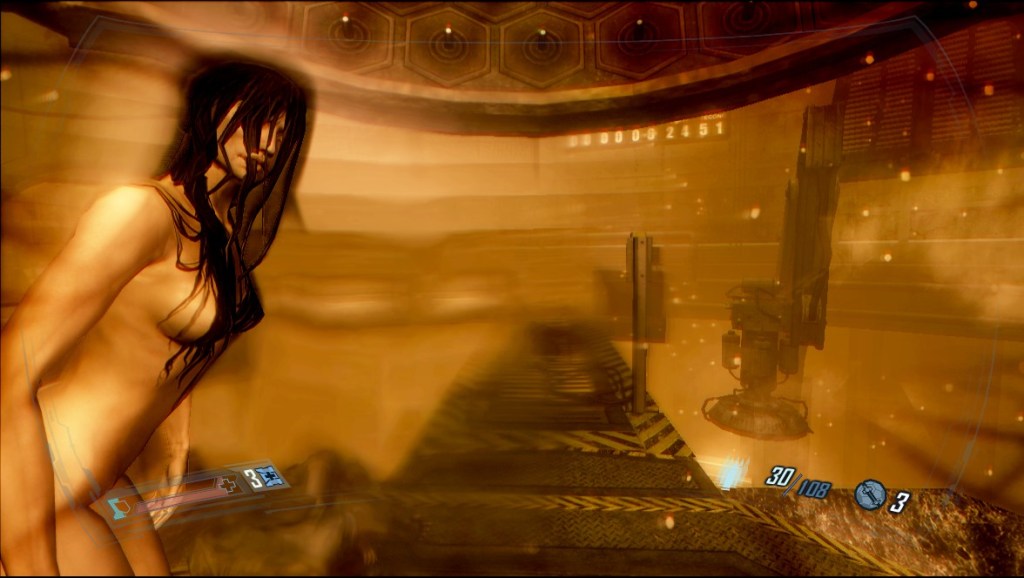
In Extraction Point, you continue as the Point Man.  Alma chases you (appearing as both the little girl and as a naked woman with long, black hair).  Grownup Alma is a clear cash-in on the horror movie scene of the mid-2000s, with her look seeing straight out of a Japanese horror film.  Picking up from the explosion of the facility, Extraction Point has the Point Man escaping the blast only to get separated from Jin and Delta Force’s Doug Holiday.  Fettel is also back (for reasons he doesn’t seem to understand).  Both Doug and Jin die along the way, which takes the Point Man through the city, an industrial district, a subway, and finally to a hospital.  At the end, the Point Man tries to escape only for Fettel to sabotage the helicopter, and the Point Man survives and watches the city continue to burn.

In Perseus Mandate, you control a member of a second FEAR squad.  This game features another faction (mercenaries called the Nightcrawlers) and has a lot more use of allied helpers.  There’s also a spooky Senator trying to coordinate a coverup, much like ATC in the base game.  The FEAR squad in Mandate finds themselves at another ATC compound, where they discover much of the same information as the base game.  Surviving the run-in at the research facility, the FEAR Sergeant finds himself running from the explosion (the facility in the base game exploding) and landing in the subway tunnels.  He makes his way to yet another ATC Facility, where the Nightcrawlers are after Alma’s DNA.  Experiencing hallucinations much like the Point Man, the Sergeant battles an army of mercenaries, replicants, and ATC security to recover Alma’s DNA and escape.

Reflection

The core story, when you shed aside all the bullets and nonsense, is that of “Physic child murderer and the people who want to take advantage of her.”  Now, the extra stuff is what makes this really garish the more I think about it, as I’m fairly certain that Harlan Wade states at some point that they like, impregnate Alma multiple times while she was comatose and then sealed her back up after she gave birth.  Given the ages, I’m guessing she was a teenager when they did this, and the fact that her father was part of all of this only adds to the unsettling nature of this story.  They mention that they took her off life support and she died, so I found myself wondering if it was all just psychic manifestations.  Yet, she gets ‘released’ at the end of the game, so I imagine there had to be something sealed away inside that vault (a psychic spirit?).  That would seem to tie into the fact that the scary/supernatural stuff in the games is often prefaced by white noise on the radio (another tie-in to Japanese horror, if I’m not mistaken). 

Having said ALL that, I don’t really know how much I can fault the killer super child for wanting to murder everyone, since even her own dad used and abused her from the earlies age possible.  If anything, Alma comes across as a Frankenstein-type villain where you can’t really fault them.  We all cheered for the Bride in those Kill Bill films when she murdered everyone.  Alma (or whatever ghost, physic phantom, scifi-trope she has become) just wants some of that too.

Bias/Nostalgia Tint – “One misunderstood ghost monster out of Five”

I owned the base game as a kid.  I remember buying it at Walmart back when physical copies of PC games were a thing.  It came in one of those lovely carboard boxes with a bunch of discs.  That said, I remembered nothing of the game, outside of ‘spooky little girl’, so I can safely say I probably had very little intentional bias. (Alex from 2021: ‘Misunderstood ghost monster’ does NOT age well)

Overall: B-

Playtime

  • F.E.A.R – 8 hours (April 1 to 3, 2020)
  • Extraction Point – 4 hours (April 4, 2020)
  • Perseus Mandate – 3 hours (April 6, 2020)

Achievements

  • Game predates achievements