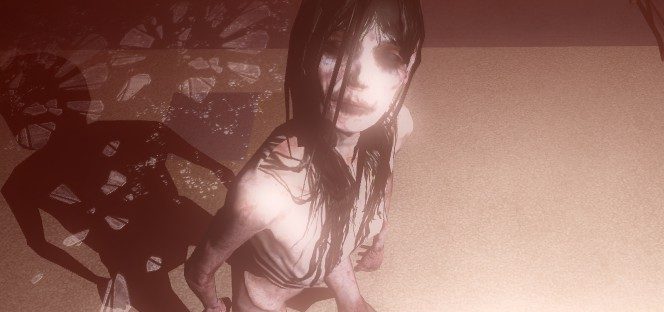
- Original Release Date: February 10th, 2009
- Developer: Monolith Productions
- Publisher: Warner Bros. Interactive Entertainment
Summary
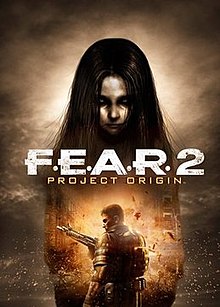
FEAR 2 is a sequel to a game that, despite me thinking it some kind of sleeper title, was a “Best of…” winner for many publications. The original even scored in the high 80s and low 90s (the PC version, at least), so the original had some splash when it came out. After two expansion packs that provided a ‘more of the same’ experience, the sequel dropped roughly four years later.
One thing I learned after completing this title is that it was designed with consoles in mind. As I mention in the more verbose portions below, I believe that ideology may have led to a bit of streamlining in the game design. This isn’t to say it’s a shallow title, as I actually prefer the sequel to the original, but I can recognize that there may be components missing here that fans of the original may have raged about on release. Elements like tilting are gone, and there are additions like the in-game PDA which houses lore and tutorial information. You can, however, interact more with objects (pushing and knocking around heavy objects as cover). The worst thing, however, is that the enemy AI feels almost dumb in this game, and that makes combat a lot less tense. This opens the game up for more horror elements, but depending on what type of person you are, you may hate the shift in emphasis.
The game is a little brighter than the original, but I liked that, because they populate the environment a lot more in this game—at least in terms of the abandoned city block segments. I believe the biggest knocks I can have here are a lackluster use of sound (relative to the original title), and the fact that the game is almost too easy on the standard setting. I don’t attest to be an FPS master, and the original FEAR game had me dying every now and again. I believe, in my entire playthrough of FEAR 2, that I died maybe twice in gun combat, with a few other deaths from poorly placed grenades.
The story here starts as a side tale, with the first chapter running alongside the last Interval of the original. From there, it takes you on a journey that further fleshes out some of the characters and buzzwords mentioned in the first title, all the while building up to one of the weirdest and most unsettling endings I’ve seen in an FPS title.
All said and done, FEAR 2 might be a step back for some who preferred the heavier focus on gunplay and dark environs of the original. In my mind, the bit of streamlining, while it made the game a bit too easy, made for a slightly better experience.
Technical/Presentation (6/10)
Gameplay
It’s similar but different relative to the first game. While it follows the same concept of murdering your way through mostly tight quarters, collecting lore pieces, and avoiding scares, they rejiggered the control scheme a little bit. The biggest thing that stuck out to me was that they made the flashlight the F button (and not the X button). The first game was very dark a lot of the time, and my hand just could never pull off that slide during combat. The ‘use’ button is now E, which means that this game got rid of the tilt/lean from the original. I can’t say I was heartbroken by that, since this game doesn’t really need that feature (FEAR 2 is easier than the original).
The biggest departure/addition is that lore comes in the form of collectable objects that are uploaded to a PDA (which is in the protagonist’s helmet/augmented reality glasses). Objects you can collect (lore, ammo, health, armor, boosts, etc) are outlined by the protagonist’s HUD, so it’s easier to track things, although the game tells me I still missed about a third of the lore objects.
I read somewhere that this game was designed for consoles, and while it doesn’t stick out like a sore thumb, it definitely made some of the small changes make sense to me when I learned that.
Visuals
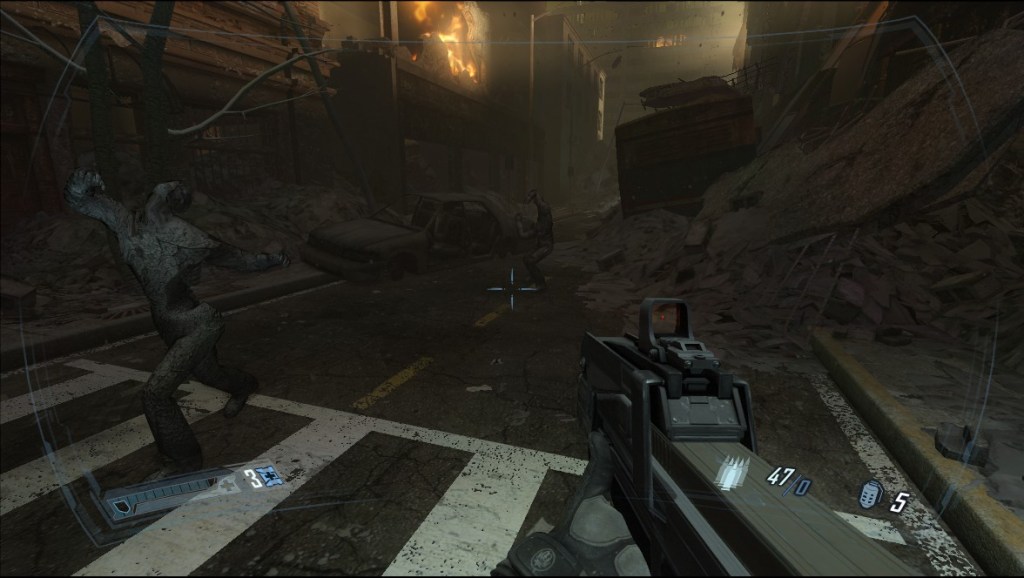
The sequel looks nice for late-2000s gaming, and given the five-year weight, it looks nicer than the original (which is something you hope for). FEAR 2 is a little less dark (aesthetically) than the original game, but there are still segments of the game where you need to rely on the flashlight. The flashlight no longer runs out of charge, like in the original, but there are many points where the game will flicker the flashlight (a la your standard ghost film). As mentioned above, there’s a new HUD that adds a layer of polish to the game and creates an in-game repository for tutorials and lore objects. As someone who loves picking up nuggets of story, this was in my wheelhouse, but I can imagine some fans of the original might prefer the original’s toned-down approach.
On a final note, I just want to point out that this game follows the same checklist of stages as the original. You got abandoned/destroyed city blocks (although they are amazing and so much better in the sequel, as the devs could populate a lot of the empty space), a pair of high tech-y facilities, and the classic subway and underground tunnel combo. There is a level in a very large elementary school that was a fun divergence from the normal FEAR schtick. All in all, I personally thought the game was a step-up from the original in terms of visuals.
Sound
Par the course when it comes to the sound category for this game. This is the one ‘meh’ area for me, because there didn’t seem to be anything improved upon from the original here. I even caught them using tracks for the original (maybe they were remastered or remixed, but it doesn’t change the fact that it was recycling). Sound effects were all right – I can’t complain too much. I did miss the vocals from the first game, as the enemies in this game just sound a little less menacing and a little less ‘real’ than the replicants in the first game. While there were more characters to engage with, the foes felt wooden, even though I preferred the approach to the supernatural foes in this game.
Story (7/10)
The story in this game touches upon some stuff mentioned in the original. You’re a member of Delta Force (the support group in the original FEAR). The two expansion packs are, apparently, noncanonical, so we have no clue what happened to the Point Man from the first game.
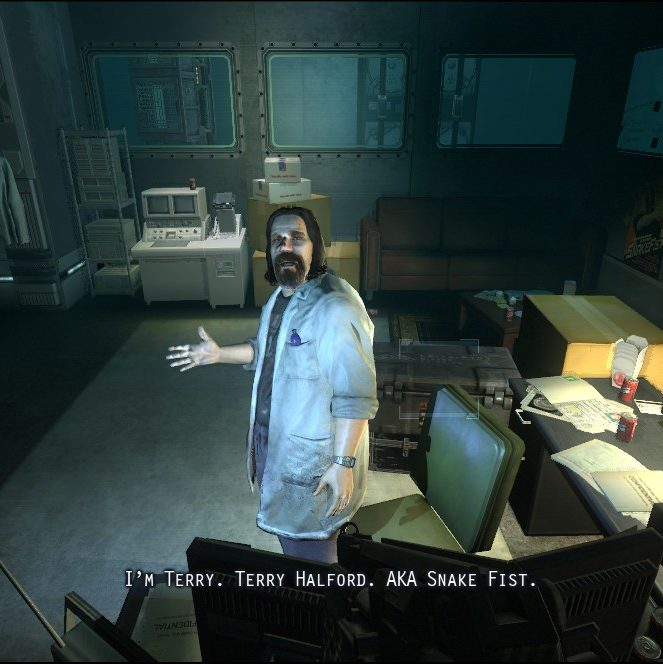
The second game’s silent protagonist is Sergeant Michael Becket (the token jagoff in the group calls him Bucket, which amused me to no end). He and the squad he’s part of are raiding the residence of Genevieve Aristide, who was mentioned in the first game as a shadowy villain. The first chapter ends with the same catastrophe at the end of the original game (city go boom for ‘reasons’), and the protagonist wakes up in a medical facility where Aristide and a guy named Snake Fist sound off in the comms to try and get his squadmates to help them. Aristide is being targeted by her own people to cover loose ends.
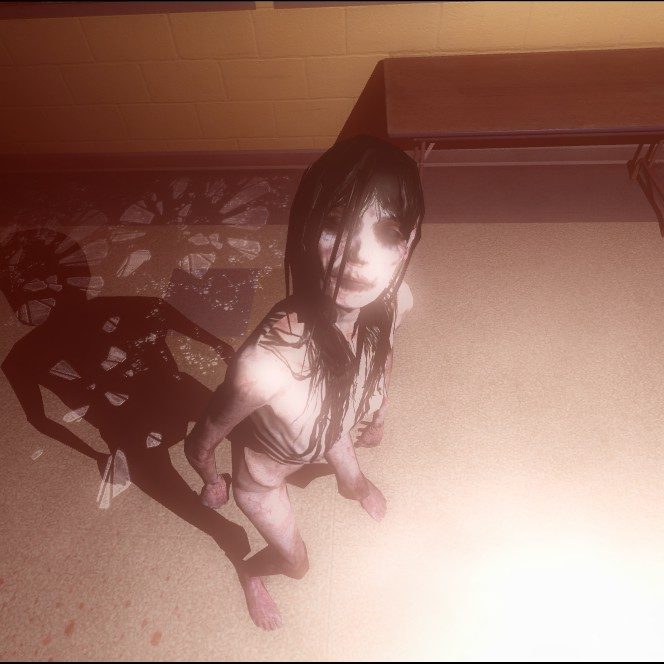
From there, the plot takes the protagonist on an extended jaunt through the destroyed parts of the city as he chases Aristide, Snake Fist, and a way to deal with Alma. In standard grim FPS fashion, characters meet varying degrees of gruesome fate as the silent protagonist marches onward, seemingly invincible, to his final destination. Like the first game, there’s a sassy female solider (Lieutenant Stokes), but in FEAR 2, she takes the role of the deuteragonist. The ‘out of shape nerd’ trope that was Norman in the first game is filled by ‘Snake Fist’ in the sequel. New to the game is also your trope of a crewcut-clad military hard-ass, who takes the form of Colonel Vanek.
Spoiler Zone
So the plot this time around sees Becket and his squad as part of Project Harbinger, which is an ATC initiative seeking to train/convert people into psychic commanders like Fettel. I believe that the people aren’t aware they’re in the program until they’re converted, which happens to the squad after the opening mission, when they are knocked out by the Point Man blowing up the Origin Facility.
After conversion, the squad all get the reflex powers like Point Man, but they also become bigger targets for Alma. Becket, who lore mentions was one of the stronger candidates (along with his squad mate Keegan), gets tricked by Aristide into entering a TAC chamber, which further amplifies his physic powers, making him a massive target for Alma and the replica soldiers.
The surviving squad mates gradually go bonkers before being taken/killed/ ‘consumed’ by Alma. A piece of lore mentions that Lieutenant Stokes was a communications officer attached to the squad and not a part of Harbinger, which I imagine meant she wasn’t surgically modified.
Like I mentioned earlier, the game follows similar level layouts to the original. It also continues the trope of having frequent nightmare/hallucination sequences. Here, it’s made clear that this is Alma trying to overwhelm the person, with the intent of driving them mad and/or making them susceptible to her ‘consuming’ them. The game has Alma frequently assail the protagonist, which makes you click the mouse buttons to shake her off – I imagine this would be akin to mashing buttons on a console controller.
After crashing into the subway, Keegan goes loopy and wanders off – Stage B of Alma-in-Head syndrome. Becket gives chase but can’t find him as they eventually make it to the nuclear reactor (also owned by ATC and supposedly abandoned). Inside, Stokes and Becket activate the machine only to have a wounded Aristide reveal that she wants to use Becket to trap Alma. Stokes gets shot for protesting this plot, and Aristide seals the psychic chamber with Becket and Alma inside. A final nightmarish sequence follows where you have to fight off Keegan (who screams about ‘why didn’t she want me’) to throw some switches.
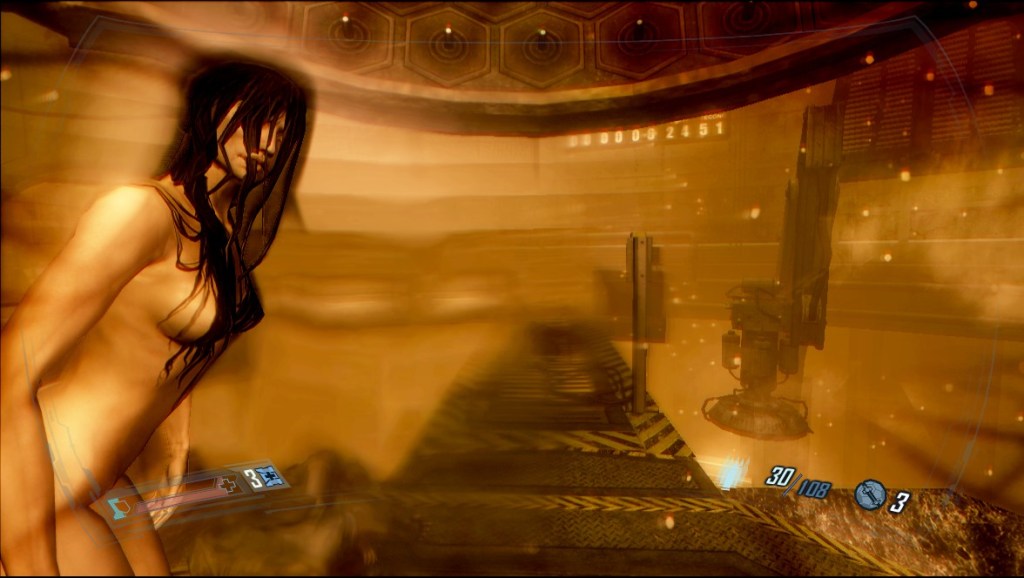
After seeing most of their squad offed in one way or another, Becket, Keegan, Stokes, and Morales head to an elementary school to rescue Snake Fist. The school, also run by ATC, is a front for experiments on children, and despite murdering everyone in his way, Becket gets to Snake Fist and talks for all of three minutes before assassins kill him. It is revealed that Snake Fist wants Becket to super charge himself and kill Alma, using a machine at a nuclear station. Meanwhile, Aristide wants to contain Alma, which Snake Fist believes is nearly impossible.
Nevertheless, the final sequence shows a pregnant Alma standing in front of Becket and putting his hand on her stomach. Sequences during the Becket fight show Alma moaning and some other very suggestive stuff. So the game ends with the protagonist being strapped into a machine and raped by a ghost (and I thought the first game had some messed up undertones).
Reflection
I think it’s clear that they wanted to make storytelling a bigger part of the experience with the sequel. After all, there are more characters in the game, and unlike the original, there is at least effort made to give them a little background information (Harbinger files on them), and they at least serve plot devices outside of telling you where to go and dying when appropriate. I appreciated that they made it a little easier to collect all the lore bits, since this is still an FPS where you only get the skeleton of the plot by gunning and running your way through the various tunnels and derelict scenery. That said, the skeleton here is more complex than in the sequel, although I imagine that may have come at the cost of streamlining parts of the experience to fit onto the console market.
In the first game, I frequently found myself questioning whether or not I should root against Alma, given her tragic story. The sequel provides little to move the needle honestly (aside from the bit at the very end, which was mortifying for me). Characters call her the apocalypse and say she’s a threat, but most of the people labeling her are the same ones that created her. There’s a line in there about ‘we create our monsters,’ and I think that’s an apt sentiment. With that, I’m curious to see how the sequel attempts to wrap up the storyline and if there’s any effort made to weave together the two games (the fate of the Point Man is still unknown, given the noncanonically nature of the expansion packs).
There is a DLC for this game, but Steam wanted me to pay 50 dollars for it, and I ain’t got time for that.
Bias/Nostalgia Tint – “Zero free pizzas at an anime convention out of Five”
This game has sat in my Steam library since I got it through one of the earliest Humble Bundles that I purchased. I booted it up six years ago (and apparently let it run for a day) and never got passed the first sequences.
Overall: B
Playtime
- 5-6 hours (April 7th to 8th, 2020)
Achievements
- Game predates achievements

 The Terra Primus Chronicles